
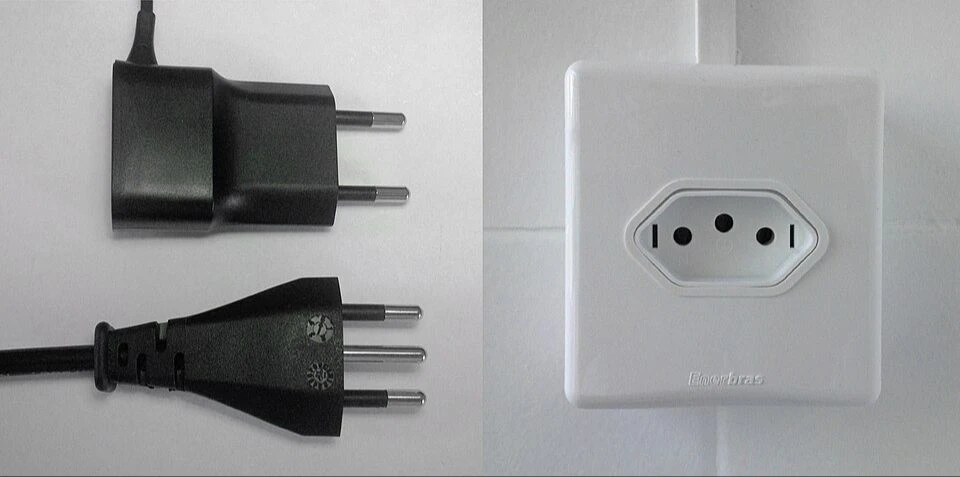

A plug that fits at home can become useless as soon as you cross a border. The mismatch reflects the way household electricity developed: countries built their own systems, and those choices became embedded in buildings and appliances.
A socket's shape is only one part of compatibility. A travel adapter can connect different shapes, but it does not itself change the voltage or frequency of the electricity supplied. Understanding the difference helps explain both why outlets vary and what to check before using a device abroad.
Why did countries choose different shapes?#
When electricity first reached homes in the late nineteenth century, it was used mainly for lighting. As appliances became more common in the early twentieth century, countries developed their own plug and socket systems for local needs. International travel was less common, and compatibility across borders was not a priority.
The International Electrotechnical Commission (IEC), an organization that develops international electrical standards, says early standardization efforts were interrupted by events including the Second World War. By the time discussions resumed in the 1950s, national systems were already widespread. Replacing the sockets and appliances built around them would have been costly. That history helps explain why designs persist; it does not mean every country made the same decisions for the same reasons.
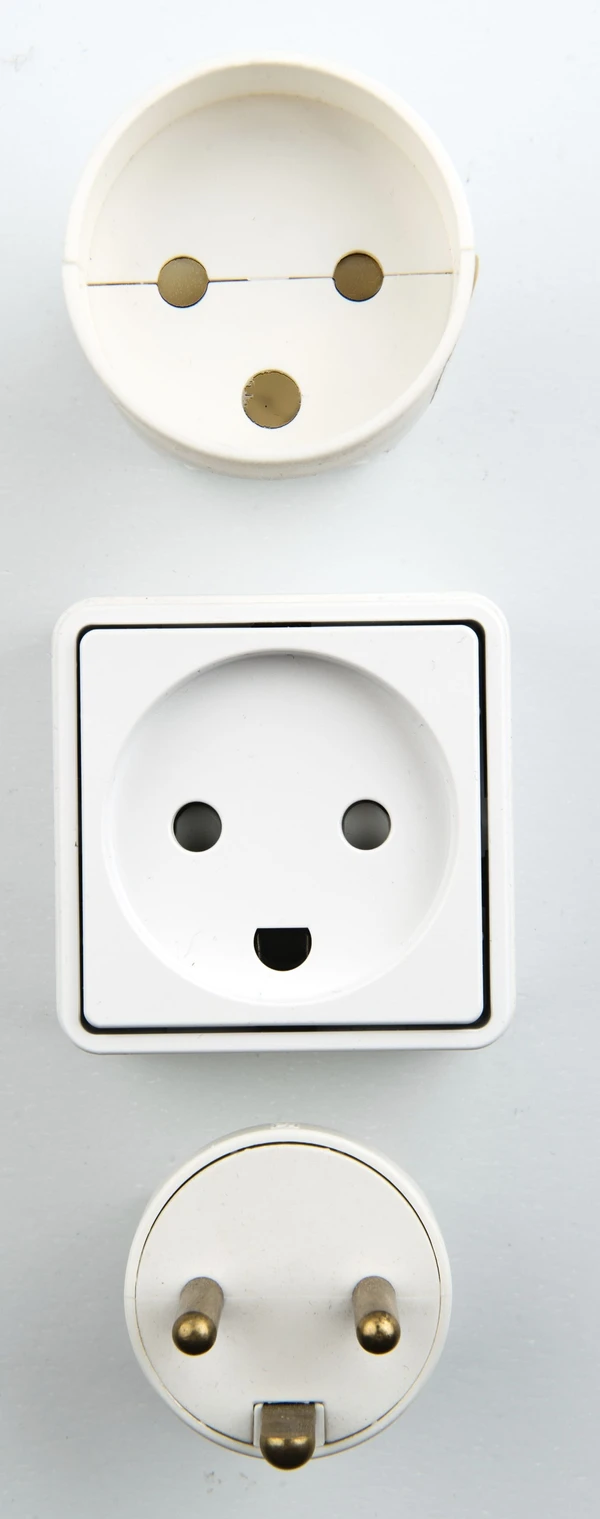
Image unavailable.
Danish electrical connectors arranged vertically: extension socket, wall outlet and plug.

Sources: [1]
What do safety features do?#
Different systems incorporate protective features in different ways. Some plugs provide an earth, or ground, connection. An adapter used with an appliance that requires earth must provide a suitable earth connection too; Electrical Safety First warns that some travel adapters do not.
A fuse is another kind of protection. The fuse inside a UK 13-amp plug is designed to interrupt the current when too much flows, helping protect the cable from overheating. Current is the flow of electric charge, measured in amperes, or amps. A plug fuse belongs to the wider safety arrangement of that system; it should not be assumed to be present in every plug design.
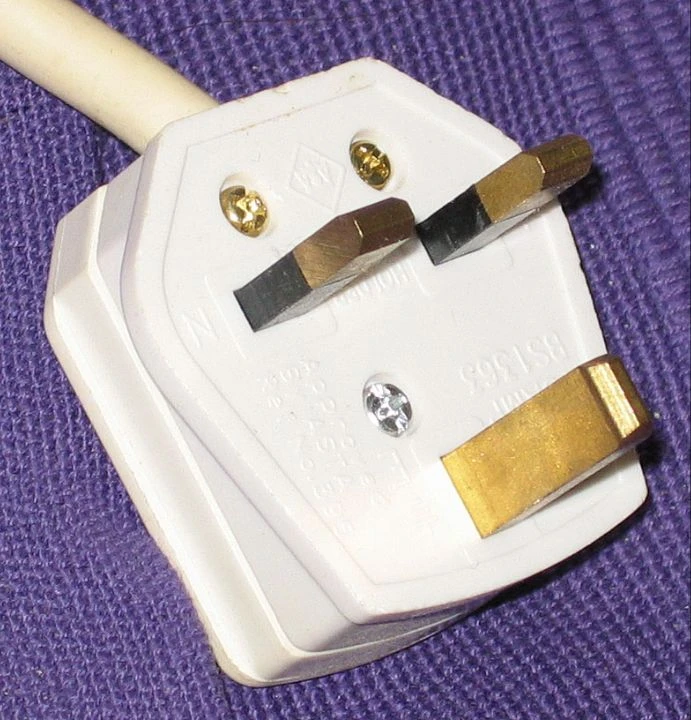
Image unavailable.
A British three-pin plug with rectangular metal pins and partly insulated live and neutral pins.

Will a plug adapter make an appliance work abroad?#
A travel adapter changes the physical connection between a plug and a socket. It does not normally convert voltage. Voltage is the electrical potential difference that drives current through a circuit. Frequency is the number of alternating-current cycles per second, measured in hertz (Hz). An appliance and its power supply need to be suitable for both the voltage and the frequency at the destination.
For example, a rating of “INPUT: 110–240 V” indicates that the appliance or its power supply can operate over that voltage range. Check the frequency on the rating as well. A device designed for a different frequency may work incorrectly: Electrical Safety First gives the example of a 50 Hz clock running faster on a 60 Hz supply. A voltage converter is a separate device from a passive plug adapter, and its suitability depends on the appliance.
The adapter must also fit the destination socket, be rated for the appliance's load, and preserve an earth connection when the appliance requires one. Consult the manufacturer or a qualified professional if the ratings or compatibility are unclear.
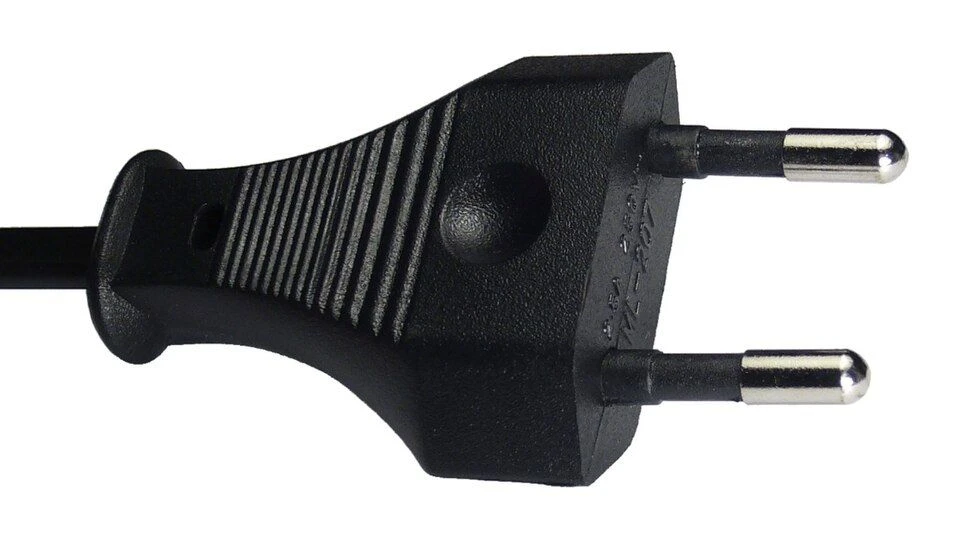
Image unavailable.
A black flat Europlug with two partly insulated round pins on a white background.

Sources: [3]
Could the world settle on one outlet?#
A common design is technically possible. The IEC developed IEC 60906-1 as a harmonized plug and socket system for international adoption. In a September 2025 account, the IEC reported that only a few countries had adopted standards based on it. Adoption depends on more than having a design: a country must weigh the cost and feasibility of changing a large installed base of sockets and appliances.
The connection at the wall is part of a network of choices made over time. Why Aren't All Power Lines Underground? explores another case where an existing electrical network affects what can be changed.
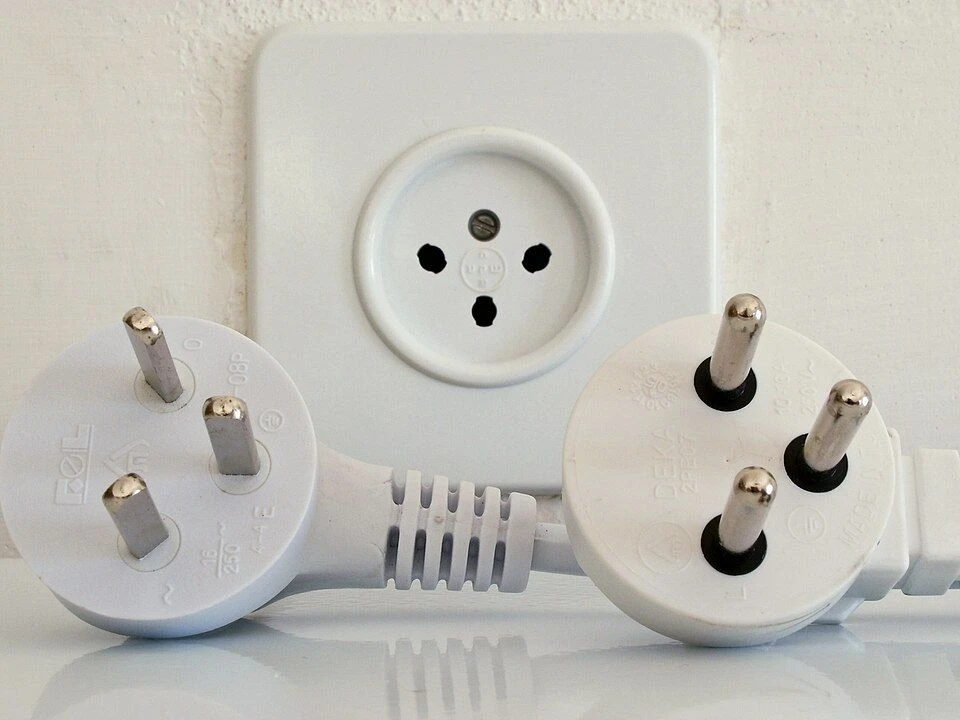
Image unavailable.
Older flat-pin and newer round-pin Israeli plugs in front of a matching wall outlet.

Sources: [1]
Keep exploring
Sources & further reading
Follow the original research, records, and explanations behind this story.
- Square pegs and round holes: how IEC ensures world's plugs and sockets are safe International Electrotechnical Commission
IEC’s September 2025 account of national systems, installed-base costs, and IEC 60906-1; adoption remarks retain that date.
- Plugs and fuses Electrical Safety First
UK plug fuse and excessive current.
- Travel Adapter - Information For Travellers: Using Electricals Overseas Electrical Safety First
Travel adapters, earthing, voltage and frequency.
See the story in motion
Watch our illustrated video, then explore another question below.
Watch on YouTubeFollow the thread