
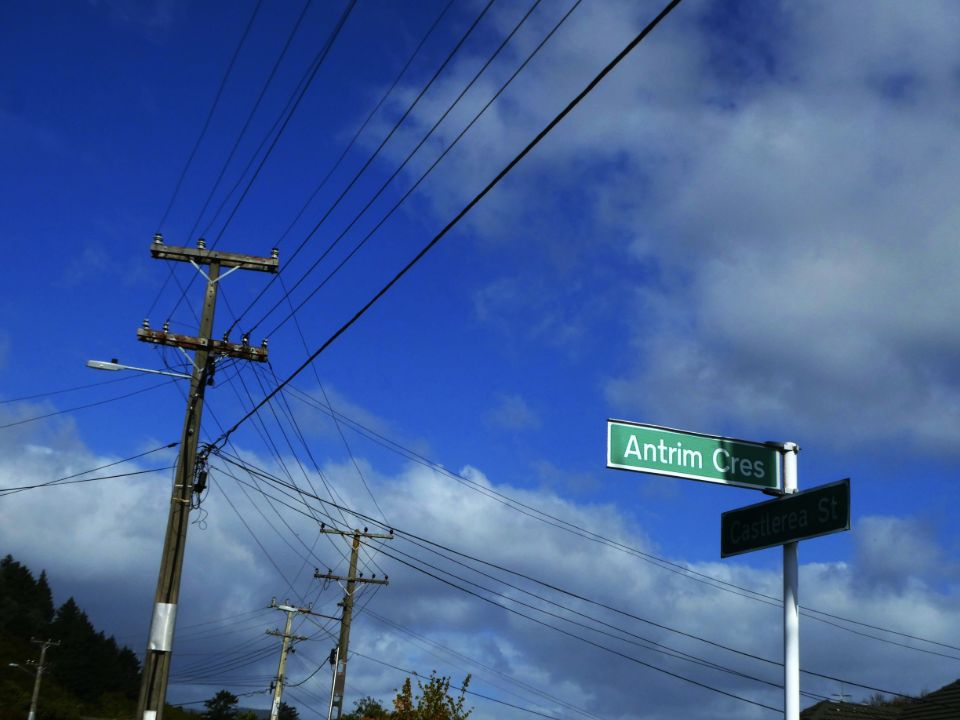

A street full of poles can look like an unfinished part of the city. Water pipes and railways disappear below ground, so why leave electricity exposed to wind and falling branches?
The short answer is that a buried power network trades one set of problems for another. It can avoid many weather-related faults, but it needs a protected route through crowded ground, a way to shed heat, and access for repairs. The best choice depends on the street and on what the community wants to protect.
What are the wires on a neighborhood pole doing?#
The wires most people see near homes are often part of distribution: the local network that carries electricity from substations toward customers. Transformers reduce voltage for use in buildings. Long-distance transmission, in contrast, moves large quantities of power across the wider grid, typically at higher voltages. The two systems face overlapping questions, but their scale and electrical design differ.
A buried local cable is still part of a larger system. It can connect to substations and transmission lines above ground, so burying the last stretch to a home does not guarantee electricity during a widespread outage. A pad-mounted transformer or other equipment may remain visible at street level even when the connecting cables are buried.
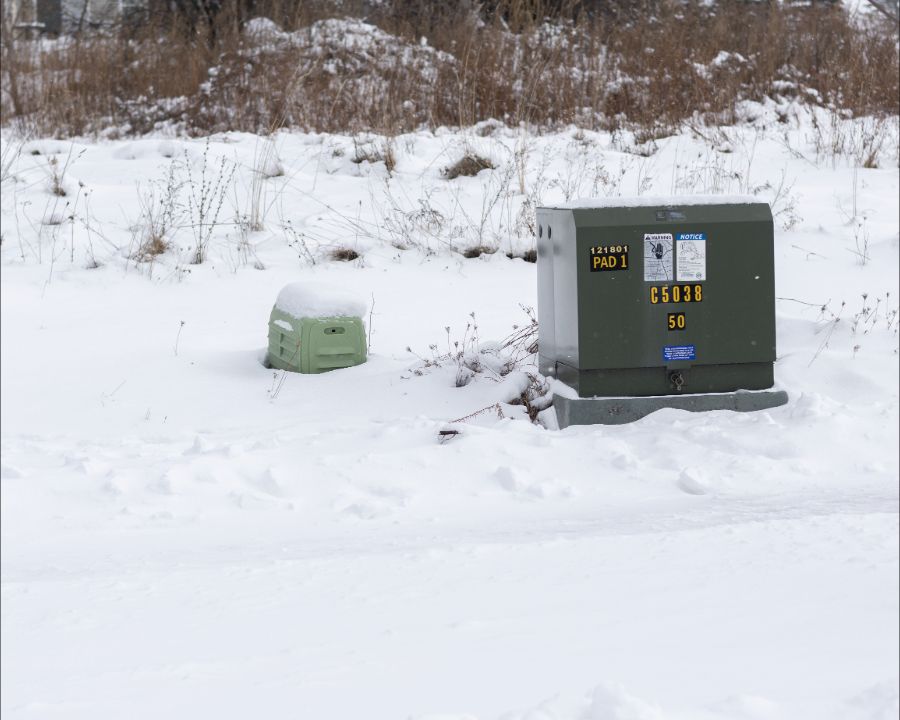
Image unavailable.
A pad-mounted electrical enclosure and access cover in snow.

Sources: [1]
Why is putting an existing line underground a construction project?#
A utility must find a route, locate other buried services, excavate or bore, install cable and protective ducts where needed, and connect customers. Roads and pavements may need to be restored. Converting an existing route also involves removing the old overhead system; it is not just a matter of dropping the same bare wires into a trench.
Local conditions matter. Rock, a high water table, existing utilities and the number of customers along the route change the work and its cost. New developments offer a different opportunity: if the ground is already being opened for streets and buildings, installation can be coordinated with that work. Dense streets also make overhead space more valuable. None of this gives a universal price ratio for every neighborhood.
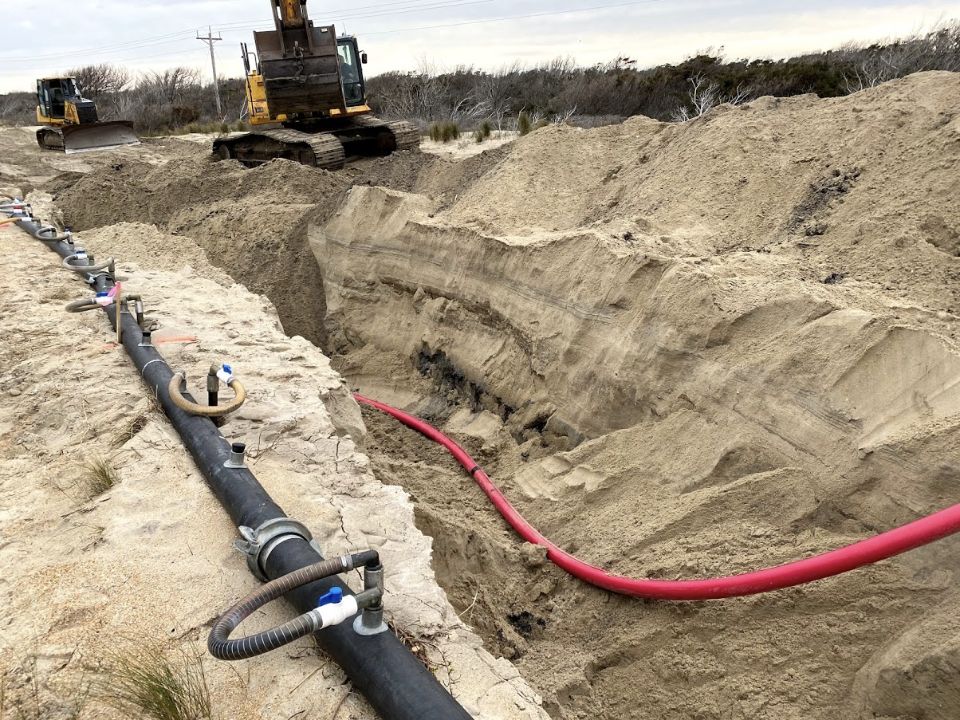
Image unavailable.
A cable in a sandy trench beside excavation equipment.

Sources: [1]
Can a buried cable get too hot?#
Yes. Current passing through a conductor produces heat because the conductor has electrical resistance. The heat must travel through the cable and into its surroundings. Overhead conductors can shed heat to the air; a buried cable depends heavily on the thermal properties of the surrounding soil and any backfill.
Engineers therefore calculate a cable's ampacity: the current it can carry under specified conditions without exceeding its permitted temperature. Soil moisture, material and cable arrangement affect that calculation. A research team modelling buried cables found that a suitable stabilized backfill could improve heat transfer in the configurations it studied. This is a design option, not a promise that every buried cable needs the same backfill or has the same rating.
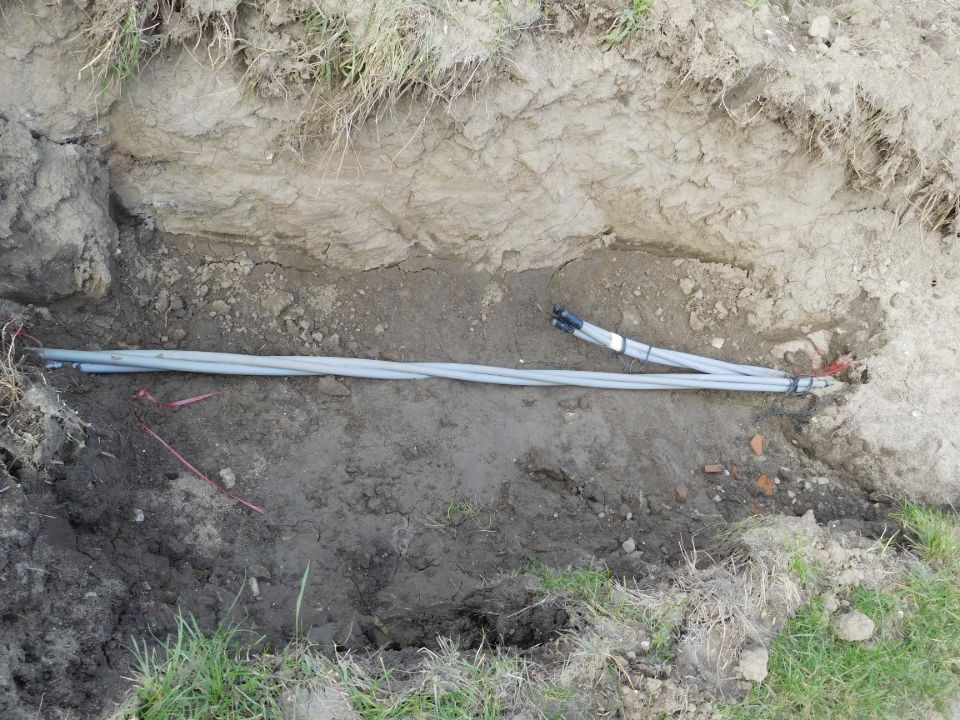
Image unavailable.
Three medium-voltage cables lie in an open trench.

Sources: [2]
Does underground mean the power never goes out?#
No. Burial shields cables from wind, ice and falling trees, but it does not make a network immune to failure. Flooding, lightning and equipment problems can still cause trouble. A fault hidden below ground may take more work to locate and reach than damage visible on a pole; repair can involve opening the ground and restoring the surface afterward.
That gives reliability two sides: how often an interruption happens and how long restoration takes. The balance depends on the hazards, design and maintenance of the particular system. Even the strongest neighborhood circuit still depends on electricity arriving from elsewhere.
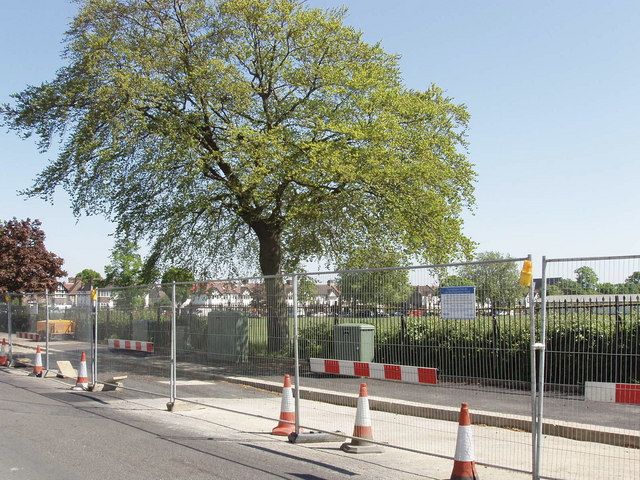
Image unavailable.
Roadworks and fencing at a power cable joint bay.

Sources: [1]
Where does burial make the most sense?#
A utility can compare specific routes against alternatives such as stronger equipment, vegetation management and changes that let power be rerouted. For a circuit repeatedly exposed to falling trees or wildfire risk, burial may be a valuable targeted investment. Elsewhere, the disruption and cost may buy less improvement than another measure. The decision also depends on who pays and on the value placed on reliability, safety and the appearance of a street.
The wider grid has hazards that no trench can remove. For another example of a disturbance travelling through electrical infrastructure, see how the Sun can disrupt a railway telegraph. And the electricity reaching a charger is only one part of an electric car's environmental footprint.
Sources: [1]
Keep exploring
Sources & further reading
Follow the original research, records, and explanations behind this story.
- Power outages often spur questions around burying power lines U.S. Energy Information Administration
Distribution cost factors, weather exposure, repair, and alternatives; 2012 analysis, not a current cost estimate.
- Calculation of Maximum Permissible Load of Underground Power Cables–Numerical Approach for Systems with Stabilized Backfill Applied Sciences
Thermal constraints, soil and backfill; numerical study with specified cable arrangements.
Follow the thread