
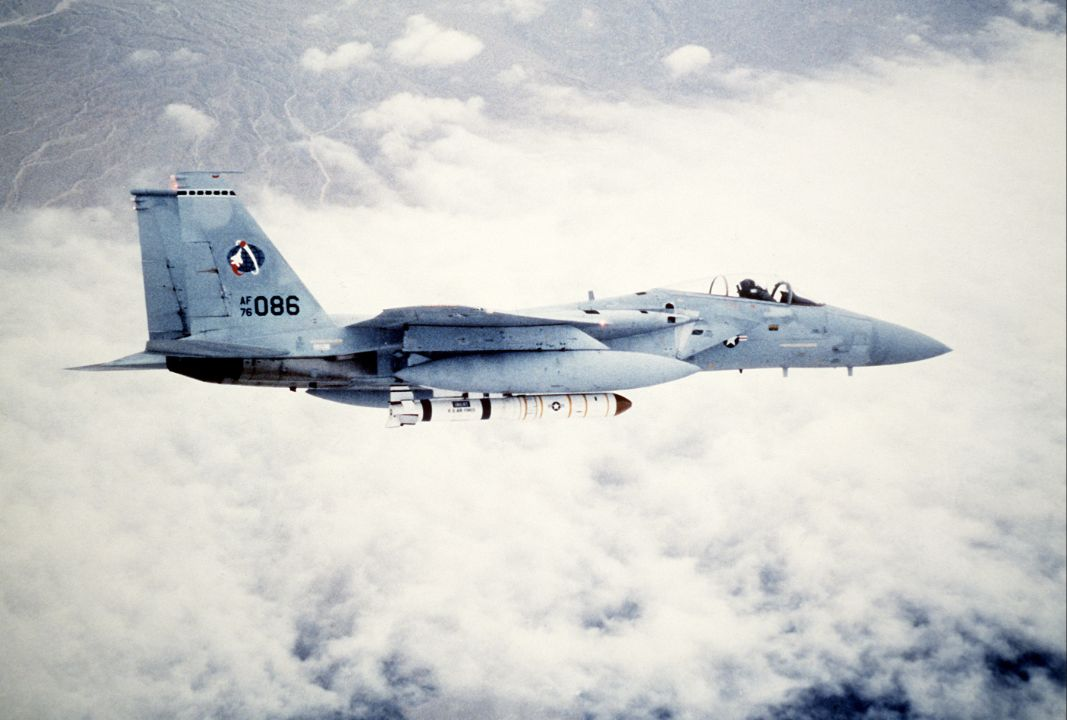

On September 13, 1985, an F-15 fighter climbed above the Pacific and released a missile toward a satellite hundreds of miles overhead. Minutes later, the target, P78-1, broke apart in orbit. The pilot was Major Wilbert D. “Doug” Pearson, flying in a U.S. Air Force anti-satellite test.
The jet did not reach space. It carried the missile to a launch point; a rocket and its homing vehicle did the rest. The test showed that a satellite could be destroyed by a direct impact. It left fragments in the same orbital environment used by other spacecraft.
How did a fighter reach a satellite?#
The F-15 was the launch platform, not the vehicle that flew up to the satellite. The Air Force historian describes Pearson climbing steeply beneath the approaching satellite’s path. The ASM-135 missile released automatically at 38,100 feet, about 11.6 kilometres above Earth. The reported interception took place about 345 miles, or 555 kilometres, above the Pacific.
The distinction matters: climbing to the release point is only the beginning of the journey. The missile’s rocket stages carried the interceptor onward, while the aircraft remained in the atmosphere. Its launch had to be timed to put the interceptor in the path of a moving target; pointing a jet toward a satellite was not enough.
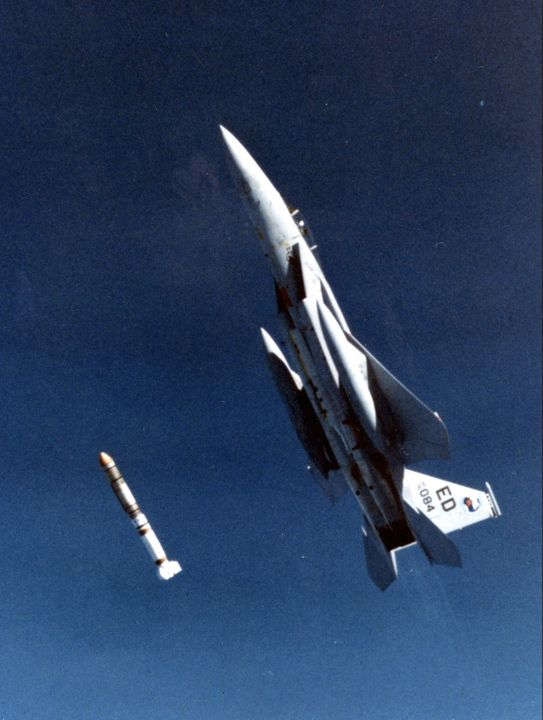
Image unavailable.
F-15 aircraft climbing steeply as a missile separates below it.

Sources: [1]
What actually destroyed Solwind?#
The interceptor was designed to collide directly with the satellite. The Air Force account says that the closing speed of the two objects made an explosive warhead unnecessary. A collision at high relative speed can transfer enough energy to break a spacecraft apart, even without an explosion.
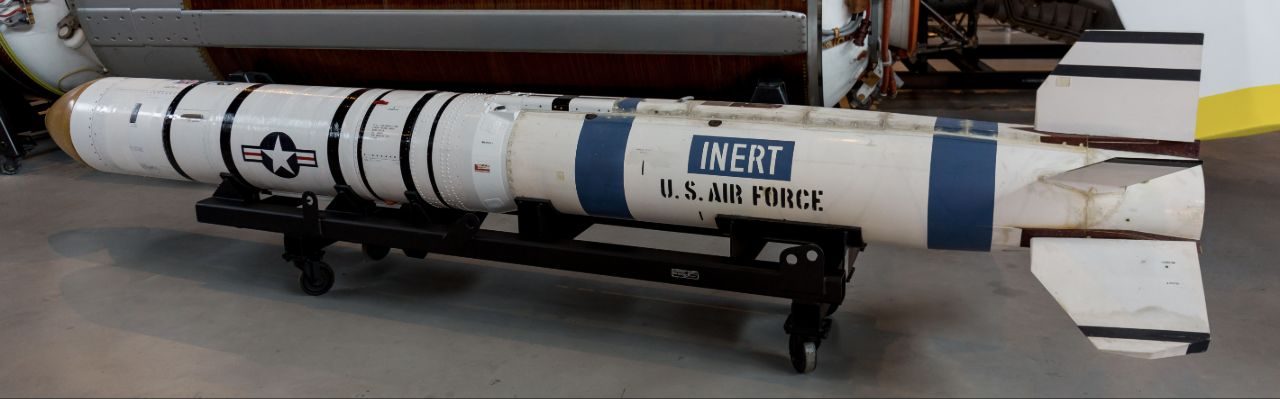
Image unavailable.
White inert anti-satellite missile on a wheeled museum support.

Sources: [1]
What was the satellite doing there?#
P78-1, also called Solwind, was a working spacecraft with scientific instruments. Launched on February 24, 1979, it carried instruments including a white-light spectrograph, an extreme-ultraviolet spectrometer and an X-ray monitor. NASA’s mission record says it continued operating until the 1985 test.
The X-ray monitor helped observe changing sources in the sky, including transient events and neutron stars. NASA’s record describes the data and its scientific uses; the Air Force history calls the target obsolete. Those descriptions do not establish that it had stopped functioning before the test.
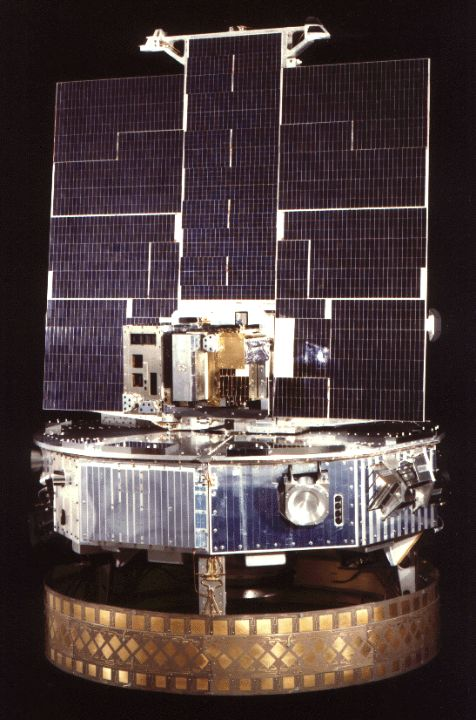
Image unavailable.
P78-1 satellite hardware with a vertical solar panel above a cylindrical instrument platform.

Why did the debris remain a concern?#
Breaking a satellite apart creates many pieces, each following its own trajectory. The destruction of the spacecraft therefore did not make the surrounding orbital region empty. Other spacecraft crossing those paths can face collision risk, and routine tracking does not capture every small fragment.
The time debris stays aloft depends on its orbit. In general, pieces at higher altitudes take longer to fall back because the atmosphere has less influence there.
A later anti-satellite test illustrates the human stakes of orbital debris: astronauts aboard the International Space Station took shelter after the destruction of Cosmos 1408. The tests were different events, but both show why fragments matter beyond the original target.
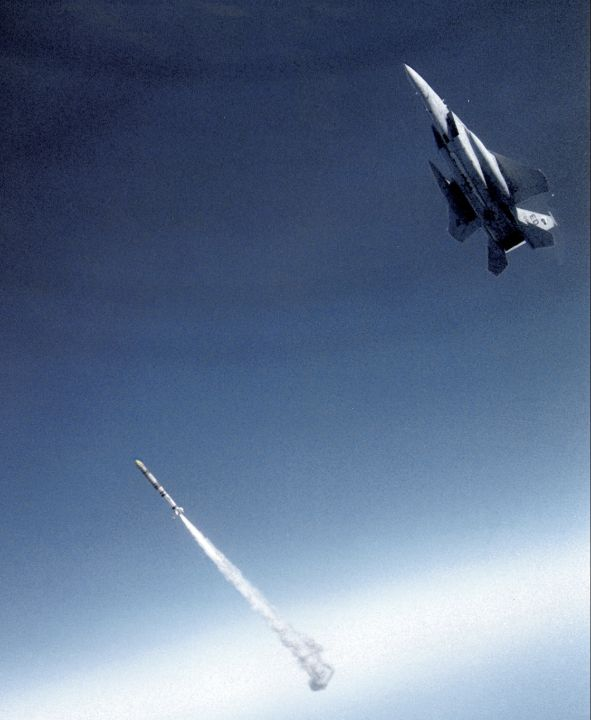
Image unavailable.
Missile trailing exhaust below an F-15 in a blue sky.

Keep exploring
Sources & further reading
Follow the original research, records, and explanations behind this story.
- Death of a Satellite Air Force Flight Test Center History Office
Historical account of the aircraft, launch, collision and test.
- P78-1 NASA HEASARC
Mission operation, instruments and scientific observations.
- Frequently Asked Questions NASA Orbital Debris Program Office
Fragmentation debris, tracking limits and qualitative orbital lifetimes.
Follow the thread