

A voice vanishes as soon as the air stops vibrating. A recording gives those vibrations another life: it translates them into a pattern that can be kept, read and turned back into sound somewhere else.
The pattern has taken many forms, from a scratch in soot to a groove, magnetized tape and numbers in a file. Each stage changed what people could do with sound: capture it, assemble a performance, carry a copy or send it across a network.
Did the first sound traces play back?#
Not at the time they were made. In the 1850s Édouard-Léon Scott de Martinville made phonautograms: wavy traces scratched into soot-covered paper by a stylus responding to sound. He meant them for visual study, not playback. Researchers much later scanned the traces and used software to turn their shapes into sound.
That recovery is an interpretation of a damaged, imperfect trace, not a pristine trip back in time. First Sounds reports that the 1857 traces lacked a timing reference, so fluctuations in the hand-cranked recording speed cannot be objectively corrected. Some later traces include a tuning-fork reference. One recording of a French song dates to April 1860; the researchers revised their interpretation of its words as their methods improved.
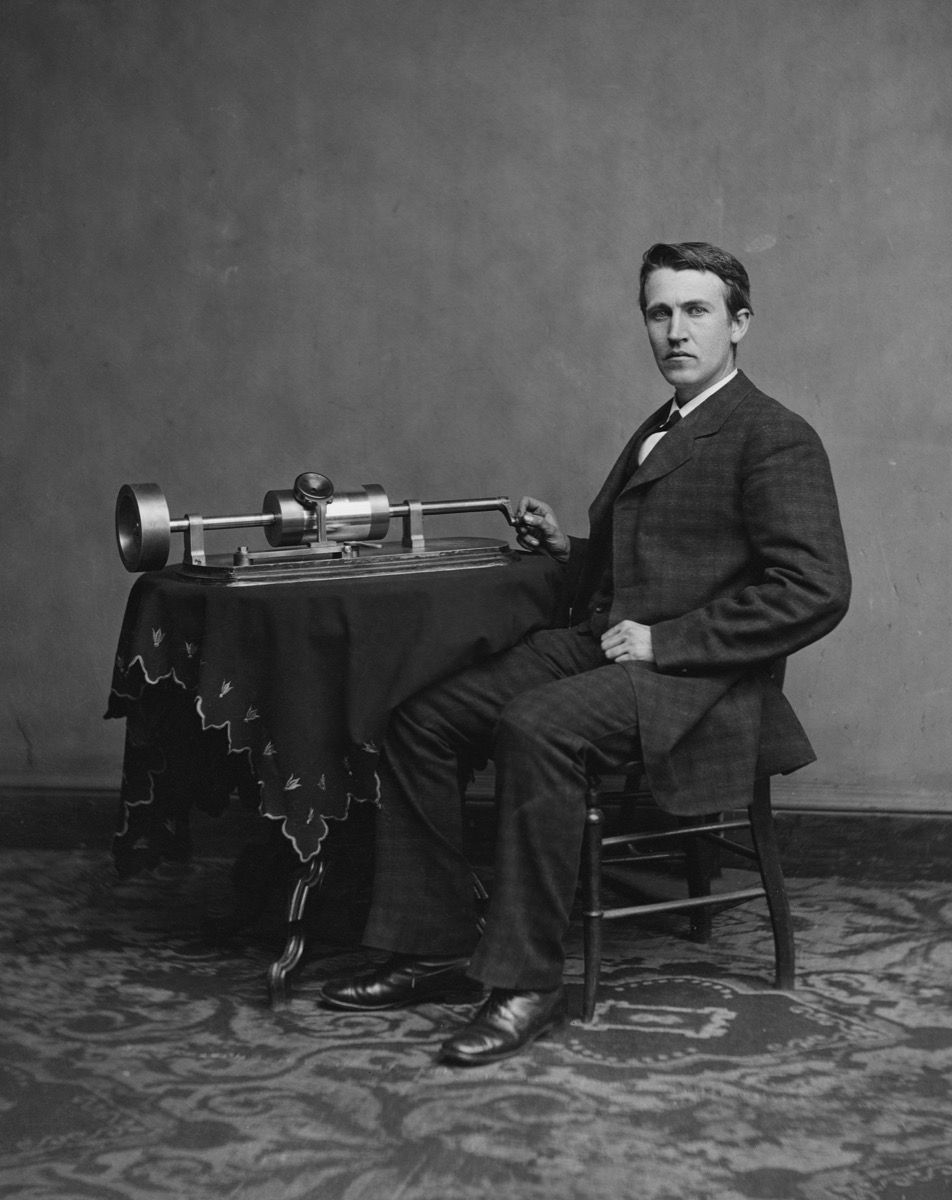
Image unavailable.
Edison with an early phonograph

How did a groove become a voice?#
A phonograph made recording and playback parts of the same mechanical process. Sound waves moved a thin diaphragm attached to a stylus, which marked a moving surface. On playback, the moving groove guided a stylus back and forth, vibrating a diaphragm and surrounding air. A horn helped project the resulting sound.
Early machines used cylinders; later discs carried a spiral groove. The physical path holds a changing pattern rather than a miniature picture of a voice. Wear, dust and imperfections in the surface add their own disturbances as the stylus follows it. The Voyager Golden Record carries another example of information stored in grooves, designed to be played far from Earth.
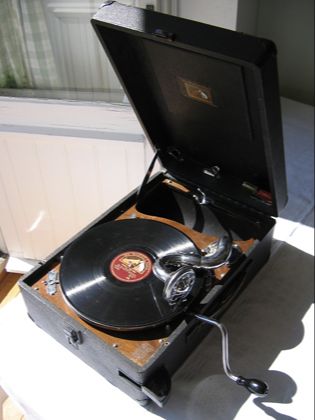
Image unavailable.
An open portable gramophone with a record on its turntable

Sources: [2]
Why did magnetic tape change the studio?#
By 1935, AEG was producing Magnetophon tape recorders, following earlier work on coated magnetic tape. The technology stored an electrical audio signal as a changing pattern of magnetization along a moving strip.
A microphone turns vibrations in the air into a changing electrical voltage. That signal passes through an electromagnetic recording head, which creates a changing magnetic field. As the tape moves past the head, magnetic material on it takes on a corresponding pattern. On playback, the recorded pattern produces an electrical signal that can be amplified and turned back into sound by a speaker.
Multitrack recording separates sounds onto tracks that can later be balanced and combined. A singer can add a part to music recorded earlier, and a mixer can change the relative levels. The finished mix is a constructed performance, even when every individual part came from a real performance. Copying analog tape can also add noise from one generation to the next.
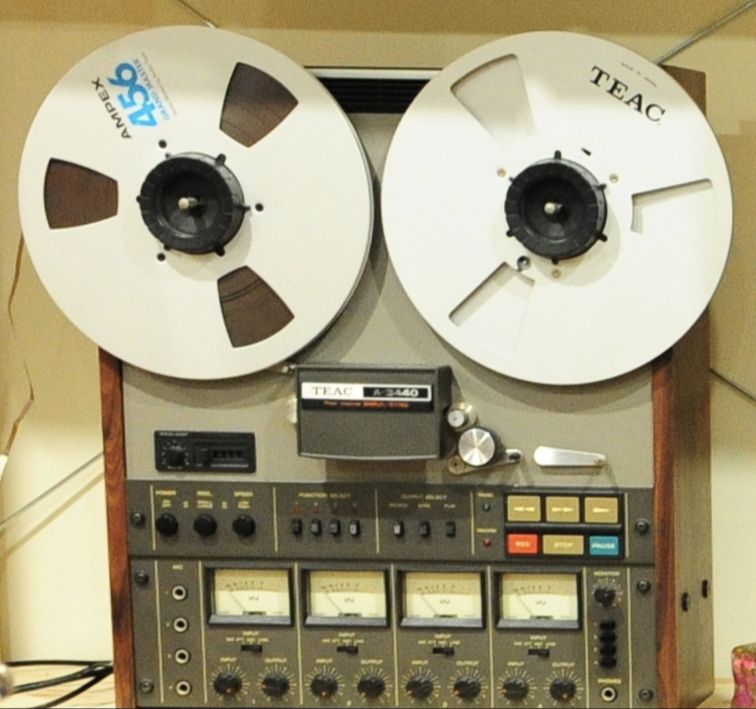
Image unavailable.
A TEAC four-track reel-to-reel recorder with two reels

How did the cassette make tape more portable?#
In 1963, Philips released the Compact Cassette. It miniaturized the existing reel-to-reel format and enclosed the two reels in a plastic shell. The magnetic recording principle remained, but the smaller, enclosed package made recordings simpler to use and easier to carry.
The personal cassette player pictured here belongs to a later stage of that history. A listener could carry a tape and its playback machine together, with headphones providing the sound. Recording technology had changed both how a performance could be assembled in a studio and where someone could listen to the finished copy.
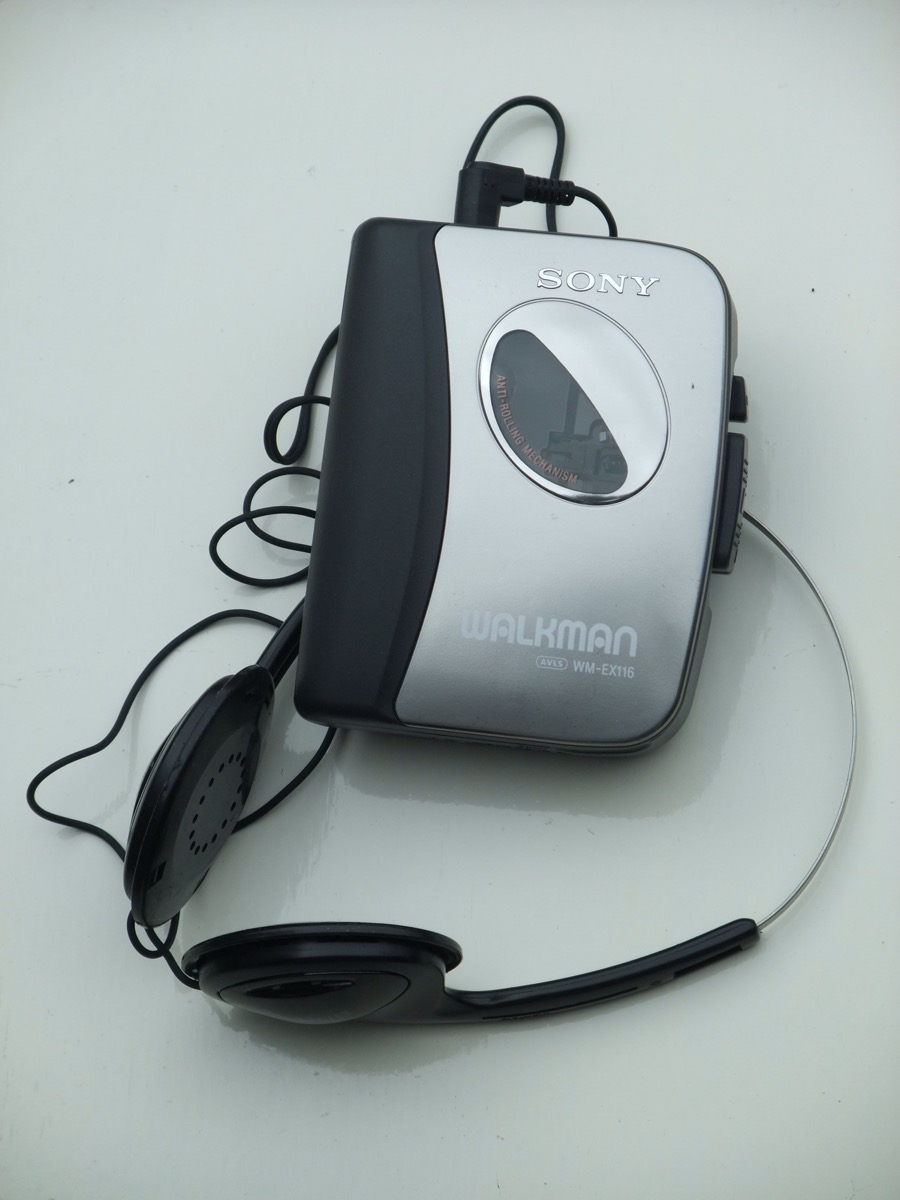
Image unavailable.
A Sony Walkman cassette player with headphones

Sources: [3]
How can sound become numbers?#
Digital recording measures an electrical audio signal at regular intervals. Each measurement is represented by a number from a finite set of values. The sample rate says how many measurements are made each second; bit depth controls how finely each sample can be represented. During playback, a converter uses the numbers to produce a changing signal for the amplifier and speakers.
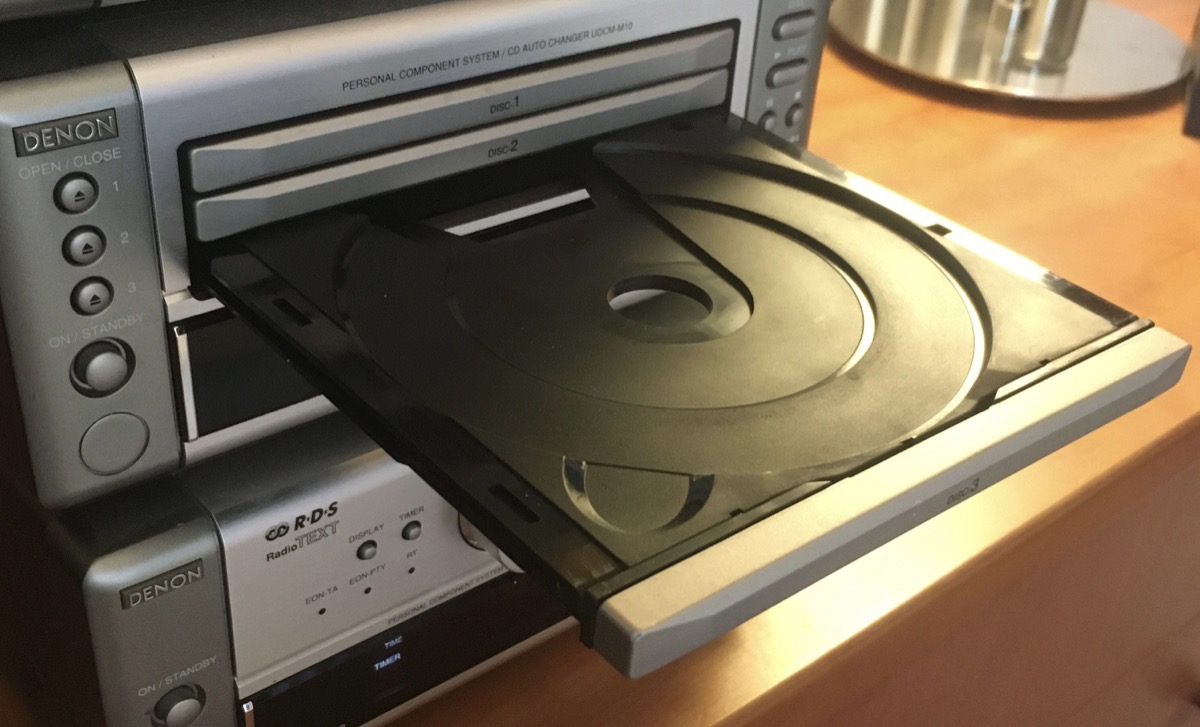
Compact disc audio uses 44,100 samples per second and 16 bits per sample per channel. Those numbers describe the sampling format; they are separate from data compression and do not guarantee that every disc sounds better than every record. The source, mastering and playback equipment matter too. Digital data can be copied without generation loss if the bits are reproduced correctly, but the storage medium and the systems needed to read the files still require care.
What makes streaming different from a record?#
Streaming changes delivery: a device receives data over a network and begins playback while more data arrives. A buffer holds some data ahead of playback to help smooth interruptions. The recording itself still has to exist somewhere, and a connection that falls behind can make playback pause.
Compression reduces the amount of data to store or transmit. Lossless compression allows the encoded data to be recovered exactly; lossy formats discard some information to reduce size further. The audible result depends on the encoding and the material, so the word “compressed” alone does not tell a listener how a particular version will sound. A stream can make a recording easy to reach without making the listener the custodian of a permanent copy.
Keep exploring
Sources & further reading
Follow the original research, records, and explanations behind this story.
- The Phonautograms of Édouard-Léon Scott de Martinville First Sounds
Scott traces, recovery and uncertainty.
- Making gramophone records National Science and Media Museum
Diaphragm, stylus, horn and discs.
- Magnetic Sound – A brief history of magnetic audio recording Museum of Transport and Technology
Microphone-to-voltage-to-electromagnet recording mechanism; AEG Magnetophon production in 1935 and Philips Compact Cassette in 1963.
- The emergence of multitrack recording National Museums Liverpool
Separate tracks, later mixing and overdubbing; not used as evidence for tape splicing or inventor-first claims.
- Preservation of Digitally Recorded Sound Council on Library and Information Resources
Accurate digital copying and preservation of media/readers; historical perspective. Its imprecise sampling-as-compression wording is rejected.
- 4. Digital Preservation and Dissemination of Sound Recordings Council on Library and Information Resources
Server and recipient buffering; historical account.
- Digital Audio Fundamentals Audacity Manual
Sampling, sample rate, bit depth, CD audio format, analog-copy noise, and lossless versus lossy compression. Storage-aging and blanket quality claims are not adopted.
Follow the thread