

On the seventh Martian day, a fictional crew checks the power available to its habitat. The imagined settlement has solar panels, storage and a source of steady power. None of the crew, its equipment or its operating figures describes a real Mars mission.
The engineering question is real: how can people keep essential systems working when sunlight changes, dust accumulates and machines need electricity around the clock?
What must the power system keep running?#
A habitat needs power for more than lights. Fans move air, pumps circulate fluids, controls monitor conditions, and equipment heats or processes materials. In this imagined mission, the crew could postpone resource processing during a shortfall while protecting life support and critical controls. Those priorities are an example of load shedding: deliberately switching off less urgent equipment to preserve power for essentials.
Power is the rate at which energy is used; stored energy is the amount available over time. A battery may be able to supply a large load briefly yet lack the energy to sustain it through a long night. Designing a real system would require measured demand, reserves, fault scenarios and the efficiency of the equipment—not a single headline power rating.
Sources: [1]
Why can't the crew count on sunlight alone?#
Solar panels generate electricity when light reaches them, so a habitat that depends on them needs stored energy or another source during darkness. Dust and changing conditions add uncertainty to the amount collected; planning must account for both ordinary nights and degraded production.
NASA's InSight lander gives a real example. Dust accumulated on its solar arrays, reducing available energy, and the lander stopped communicating in 2022. That outcome does not show that solar power is impossible for a human mission: a different system could combine larger arrays, maintenance, storage and other generation. Each choice adds equipment and operational demands.
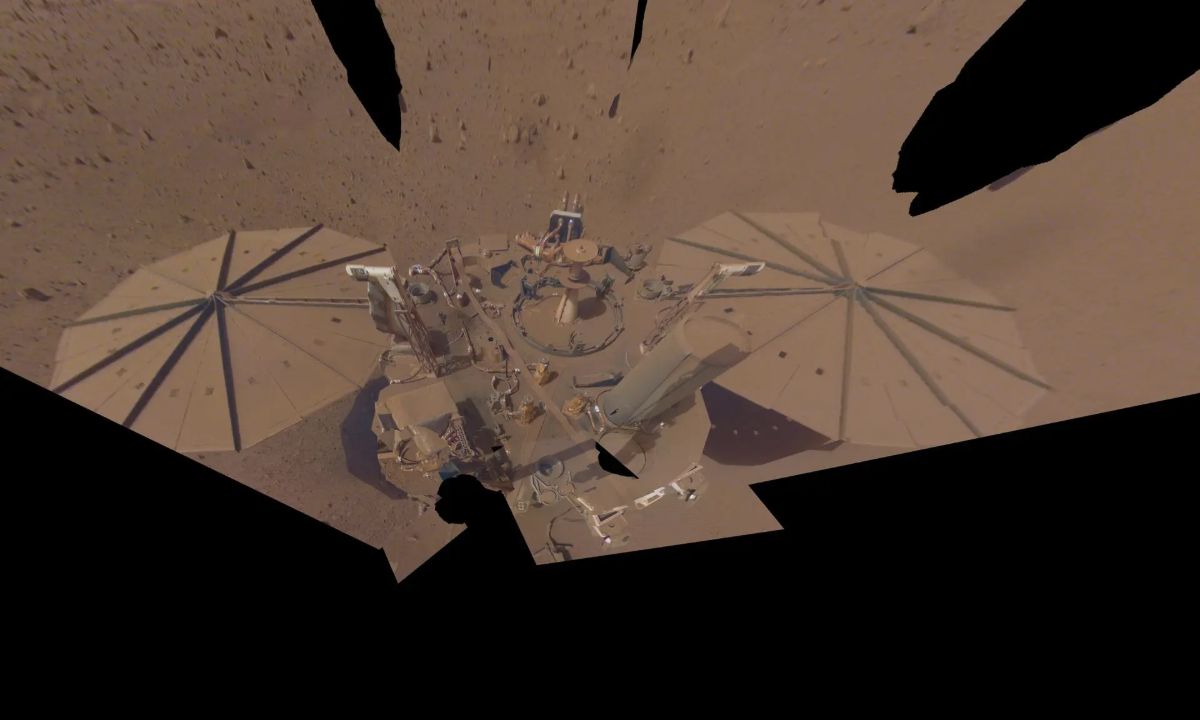
Image unavailable.
InSight lander and circular solar arrays covered by Martian dust.
Sources: [2]
How could a reactor supply steady power?#
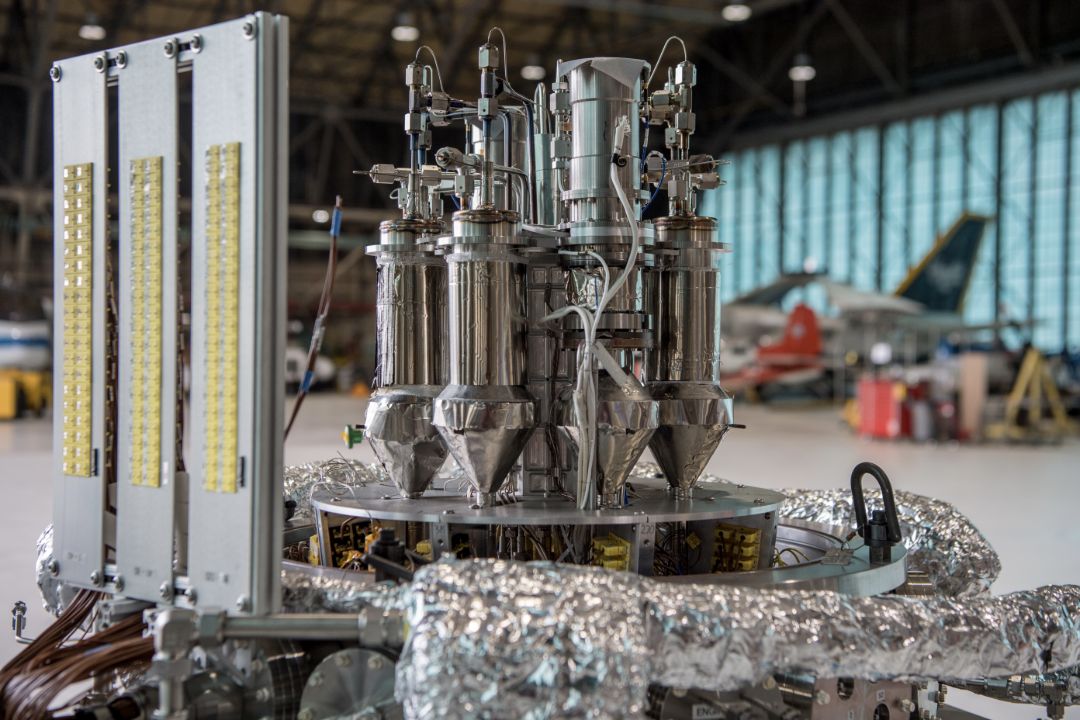
A fission reactor releases heat when atomic nuclei split in a controlled chain reaction. In the Kilopower concept, heat pipes carry heat from the reactor to Stirling converters. A moving piston in each converter drives an alternator to produce electricity. The system also needs to dispose of heat that is not converted into useful electricity; a real installation would need a designed way to reject it and connect safely to the habitat.
The KRUSTY experiment tested this approach on Earth at the Nevada National Security Site. NASA’s May 2018 report described its final phase as a 28-hour test that included startup, ramping to full power, steady operation and shutdown. The team also simulated reduced power and component failures. It was a prototype demonstration, not a Mars deployment or a measured settlement power budget. NASA describes the Kilopower project as concluded.
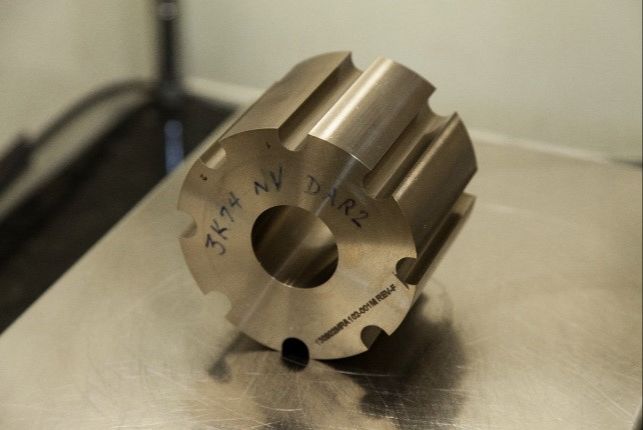
Image unavailable.
Metal core piece with a central bore and grooves for heat pipes.

Is every nuclear power source a reactor?#
No. A radioisotope generator uses heat from the natural decay of radioactive material rather than a controlled fission chain reaction. The Multi-Mission Radioisotope Thermoelectric Generator, or MMRTG, on Mars 2020 converts heat from plutonium-238 decay directly into electricity. NASA describes about 110 electrical watts at the start of a mission, alongside heat that can help keep equipment warm.
That real rover system illustrates another way to supply power without sunlight. Its starting output is a device specification, not evidence that it can carry an imagined human habitat's loads. Comparing technologies requires looking at the demand, useful heat, mass and operation of a complete mission.
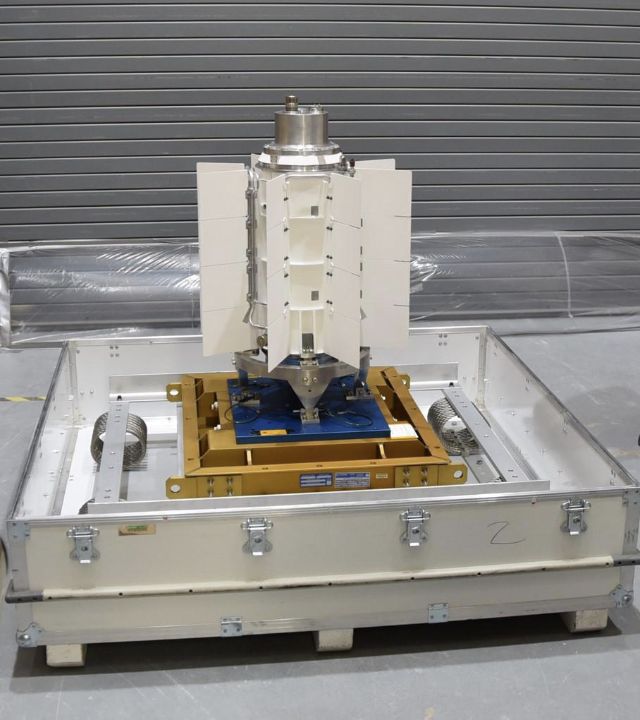
Image unavailable.
Finned cylindrical MMRTG unit on Earth before fueling and testing.
Sources: [5]
What happens when something fails?#
In the fictional settlement, the crew could reduce nonessential processing, draw on stored energy and investigate the fault while keeping the most critical equipment supplied. A practical design would also consider independent paths, maintenance and how a failure in one component affects the rest. The necessary reserve and recovery time depend on equipment and failure assumptions; this story does not assign them numbers.
Power is tied to other systems. Processing water needs equipment and energy, while people need water even when equipment is shut down. The related fictional account of water on Sol 30 explores that dependency from another angle.
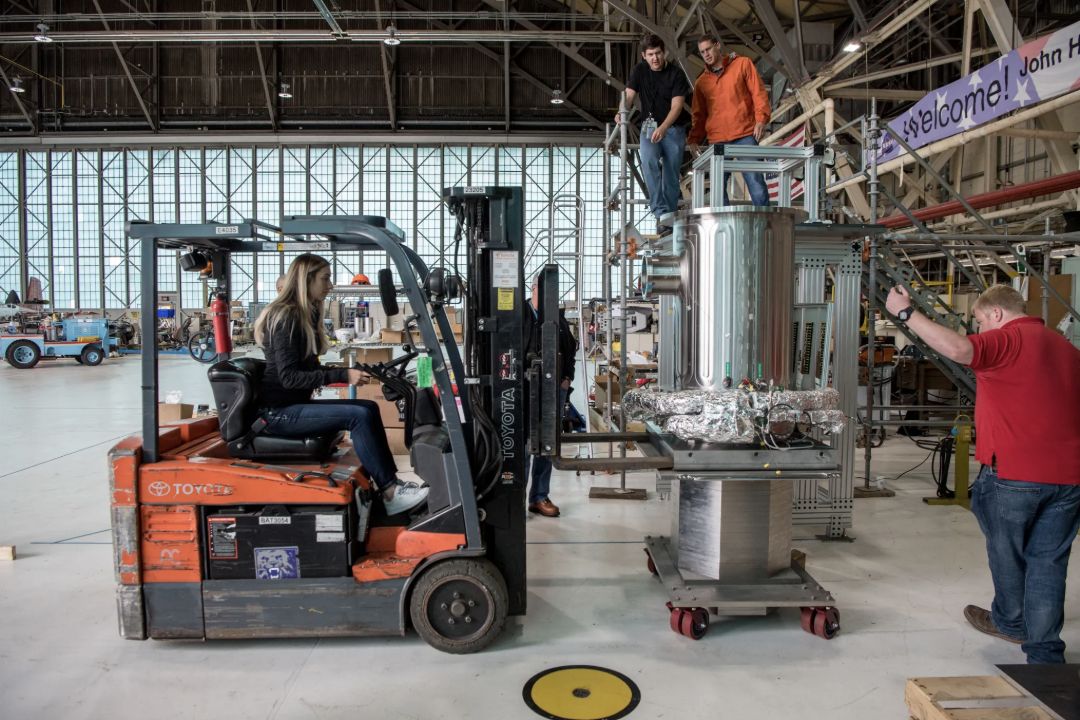
Image unavailable.
Technicians use a forklift to handle Kilopower test equipment in a hangar.
Sources: [1]
Keep exploring
Sources & further reading
Follow the original research, records, and explanations behind this story.
- Powering Up NASA’s Human Reach for the Red Planet - NASA NASA
Power options, heat pipes and Stirling conversion; historical concepts.
- NASA Retires InSight Mars Lander Mission After Years of Science - NASA NASA
Dust accumulation and InSight mission end.
- Demonstration Proves Nuclear Fission System Can Provide Space Exploration Power - NASA NASA
KRUSTY ground test and results.
- Kilopower - NASA NASA
Concluded project and completed experiment.
- Mars 2020's MMRTG - NASA Science NASA
MMRTG decay, electrical output, heat and pictured hardware.
Follow the thread