
On the thirtieth Martian day of a fictional crewed mission, a glass of water stands for much more than a drink. The crew must keep its people alive, maintain a habitat and decide whether plants can share a limited supply. The title’s “most expensive” water is a narrative idea, not a measured price or a claim to an economic record.
The scenario is invented; the engineering questions are real. Water can be carried from Earth, recovered from use and perhaps obtained from Martian ice. Each route depends on equipment, power and a way to tell whether the result is safe.
Why bring water if Mars has ice?#
A crew needs dependable water before it can count on a local source. In this scenario, stored water gives the fictional habitat a starting supply and a reserve while the crew checks its equipment and investigates the ground. A reserve also buys time if recovery or power fails.
Mars is cold and has a very thin atmosphere. A map suggesting buried ice does not tell a particular crew how much usable water lies under its landing site. The choice of a site, the quantity carried and the size of the reserve here are fictional design decisions, not a plan for an approved mission. The companion story about the habitat that arrived first explores the shelter on which such a system would depend.
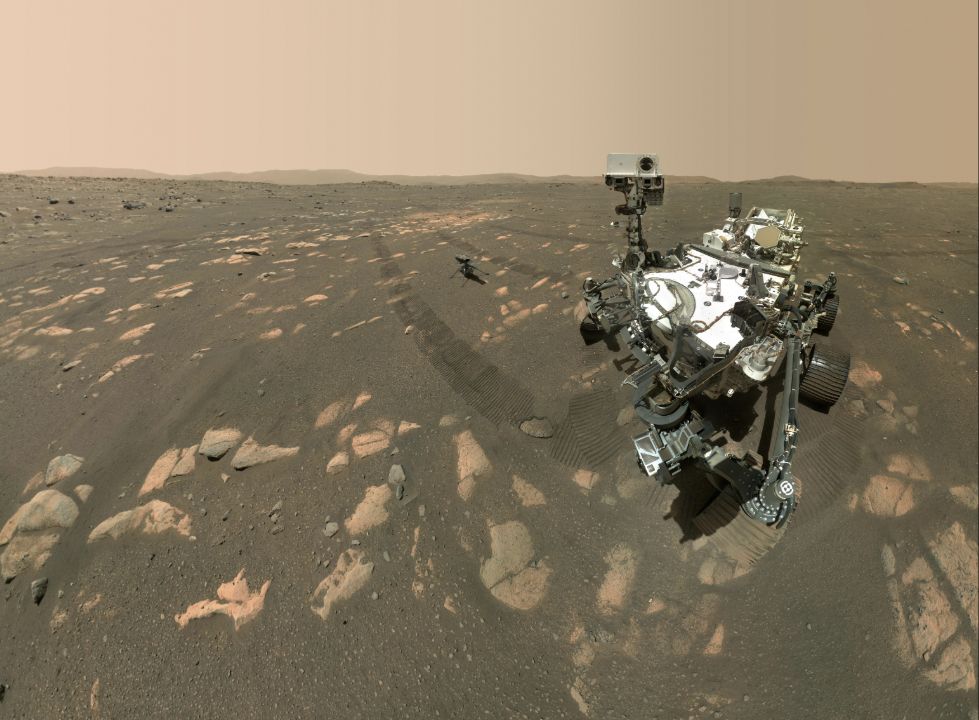
Image unavailable.
Perseverance rover and Ingenuity helicopter on the rocky surface of Mars.
How can used water become useful again?#
Recovery collects water from different streams and treats it for another use. On the International Space Station, equipment captures moisture from cabin air, including water released in breath and sweat. A processor distils urine under reduced pressure; another extracts additional water from the concentrated liquid left behind, called brine. Filtering, catalytic treatment and checks then help produce potable water, with material that fails a check sent back for processing.
In 2023 NASA reported that the station’s system had demonstrated 98% total water recovery with the brine processor. That milestone describes a particular demonstrated configuration, not a promise that a Mars settlement would recover every litre or could run forever without replacement. For our fictional crew, maintaining filters, monitoring equipment and keeping spare capacity would matter alongside the recovery rate.
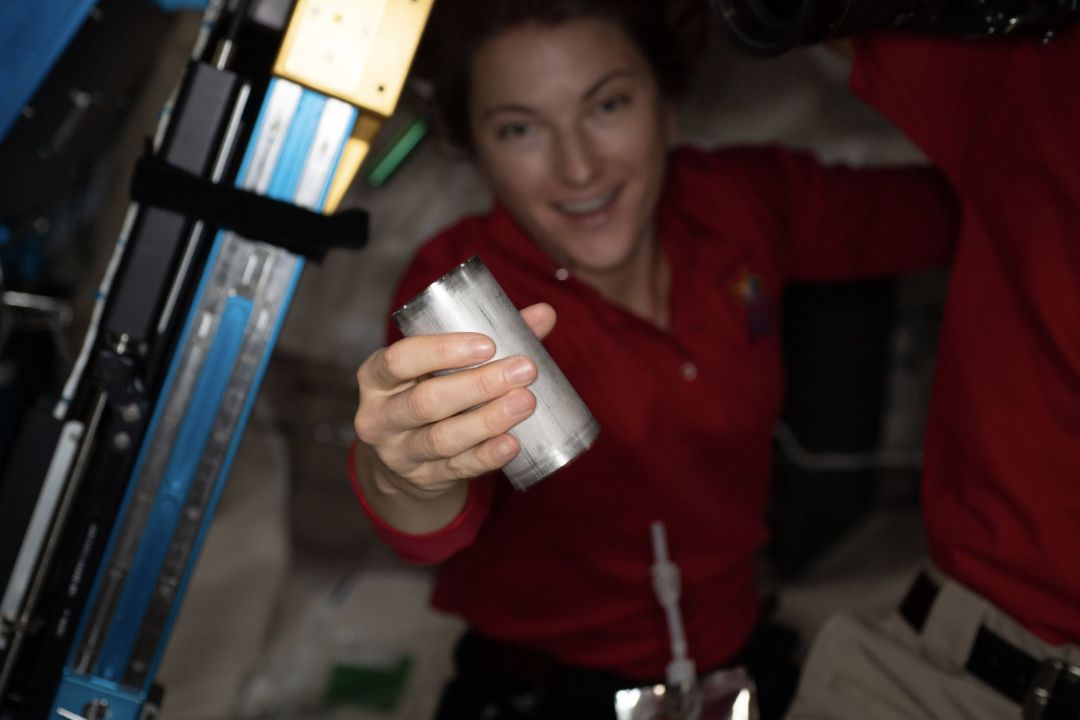
Image unavailable.
Astronaut Kayla Barron replaces a filter in the ISS Brine Processor Assembly.
Sources: [2]
Does recovered water automatically become drinking water?#
No. Recovery is the act of getting water back; potability is a quality requirement. A water stream can be useful for one purpose and still need further treatment or testing before people drink it. The ISS system uses filtration, catalytic treatment, sensors and iodine as part of its process. Its hardware works in orbit, and its demonstrated process does not certify an imagined Mars system.
In the story, the crew would hold questionable water apart until testing and treatment establish whether it is suitable for its intended use. Clean reserves help cover the interval if a component needs repair or a batch must be processed again. These are design deductions, not recorded events on Mars.
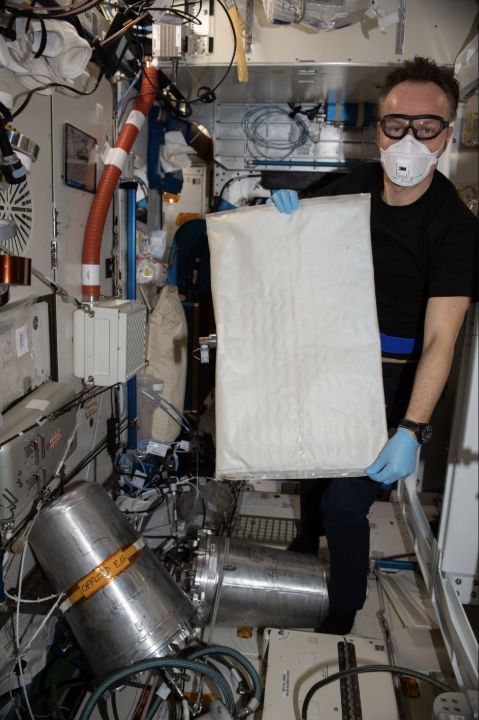
Image unavailable.
Astronaut Matthias Maurer replaces a bladder in the ISS Brine Processor Assembly.
Sources: [2]
Where might a crew find Martian ice?#
Observations give a reason to look, not a guarantee of a mine. NASA’s 2019 discussion of ice prospecting combined measurements of how the ground heats and cools with radar, impact and other evidence to infer shallow buried ice in some midlatitude regions. The measurements help choose places to investigate; they do not establish the purity or recoverable yield at this fictional landing site.
A separate, direct observation came from NASA’s Phoenix lander in the far north of Mars. In June 2008, bright chunks exposed in a trench disappeared between images taken on sols 20 and 24. NASA interpreted this as water ice sublimating: solid ice passing directly into gas. Phoenix reached ice with a robotic arm there; it did not demonstrate drinking-water production for a crew elsewhere.
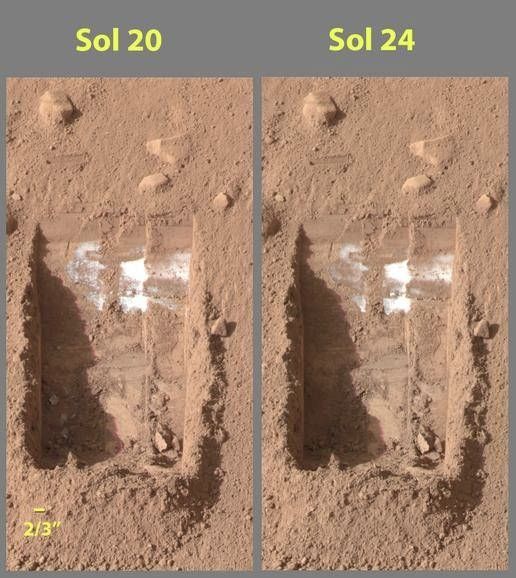
Image unavailable.
Two Phoenix lander camera views of an excavated trench, showing bright ice chunks disappearing over four sols.

What would turn ice-bearing ground into water?#
The fictional crew would first need to locate and characterize a deposit, then select equipment for the material actually found. Depending on that material, excavation or drilling could bring ice-bearing ground into a contained system. Heating could release water, after which solids would need separating and the recovered water would need treatment and testing for its intended use.
Each step needs equipment and energy, and the thin atmosphere makes containment a practical concern when exposed ice can sublimate. A picture of ice cannot establish its purity, how much a machine could recover, or whether a proposed method would work at a different site. The evidence supplied here does not provide a production rate, energy bill or price for this fictional operation. Its electricity would compete with other habitat needs, a problem explored in Powering Life on Mars.
What changes when the crew grows plants?#
Plants add another demand to the water budget. They also need nutrients and light, so a crop system ties water management to power and food planning. Some water may be recoverable within a designed system, but the amount returned and the quality needed depend on the equipment and crop conditions; no specific farm consumption is assumed here.
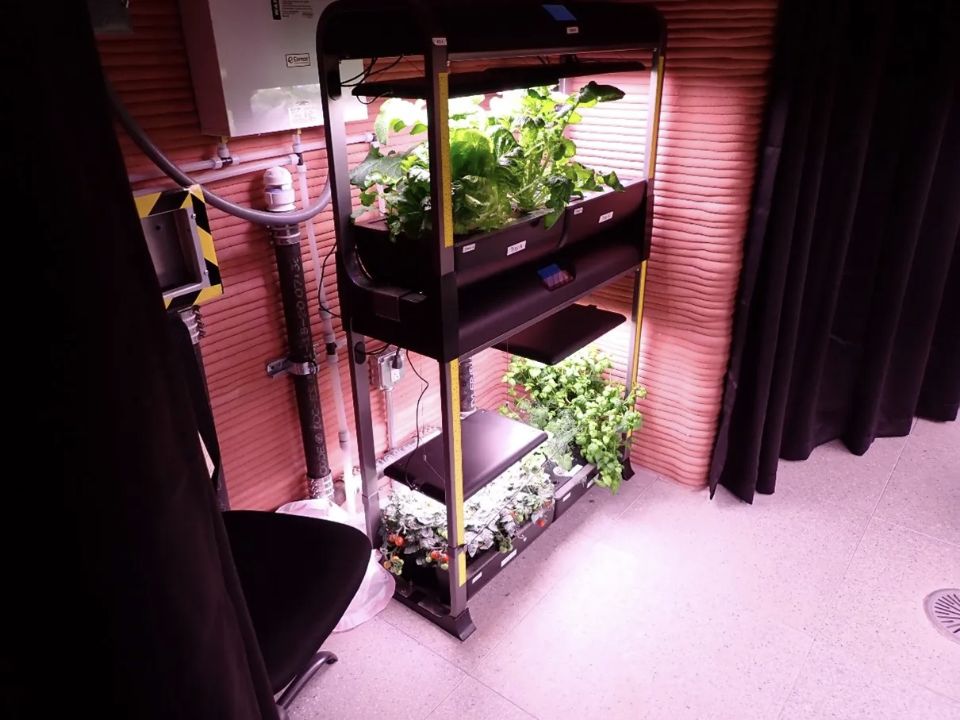
An Earth example is NASA’s CHAPEA analog habitat, where a crop system supplies water, nutrients and light to plants. Its crew harvested greens and other crops. That test illustrates cultivation in a controlled habitat on Earth; it does not establish that the fictional Mars crew has a functioning farm or prove how much water one would use. On sol 30, the useful decision is therefore to match planting plans to demonstrated supplies and reserves, rather than count on an untested harvest or an unverified ice deposit.
Sources: [5]
Keep exploring
Sources & further reading
Follow the original research, records, and explanations behind this story.
- Mars Facts NASA
Thin atmosphere and cold environmental context.
- NASA Achieves Water Recovery Milestone on International Space Station NASA
2023 recovery demonstration, treatment and hardware.
- NASA's Treasure Map for Water Ice on Mars NASA Jet Propulsion Laboratory
Orbiter evidence used for prospecting shallow ice.
- NASA Phoenix Mars Lander Confirms Frozen Water NASA Jet Propulsion Laboratory
Phoenix trench observation and June 15/19 image dates.
- First NASA Mars Analog Crew Passes Mission Halfway Mark NASA
Earth analog crop system and harvest.
- Perseverance’s Selfie With Ingenuity NASA
Actual robotic Mars image context.
Follow the thread