
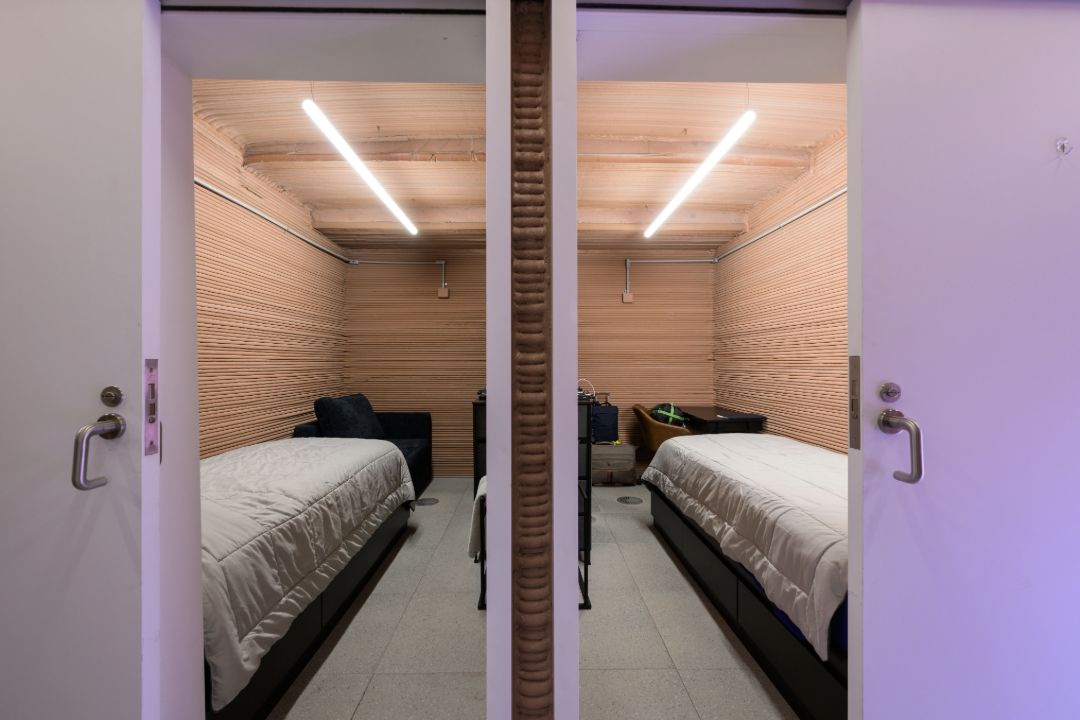
A home is waiting on Mars before its crew arrives. In this fictional Sol 1 scenario, an uncrewed habitat has already landed, and the people approaching it must decide whether it is safe to enter. The landing and the crew are invented; the engineering questions come from real spaceflight and test programs.
The critical question is what a home must prove before its door opens. A successful delivery would be only the beginning: the crew would need evidence that the structure holds an atmosphere and that the systems supporting it can keep working.
Why send the home ahead?#
Sending a habitat before the people would give a fictional mission time to inspect it remotely and resolve problems before anyone depends on it. After landing, operators could check whether its power supply starts, its systems respond and the structure retains pressure. The arriving crew would still need another protected place to wait if those checks failed; predeployment alone would not make the habitat safe.
Mars makes that separation valuable because its atmosphere is very thin and mostly carbon dioxide, nitrogen and argon. A breathable interior would need a sealed, controlled environment. NASA’s Perseverance rover shows that robotic equipment can operate on the real surface, but it does not establish that this imagined habitat or its landing system exists.
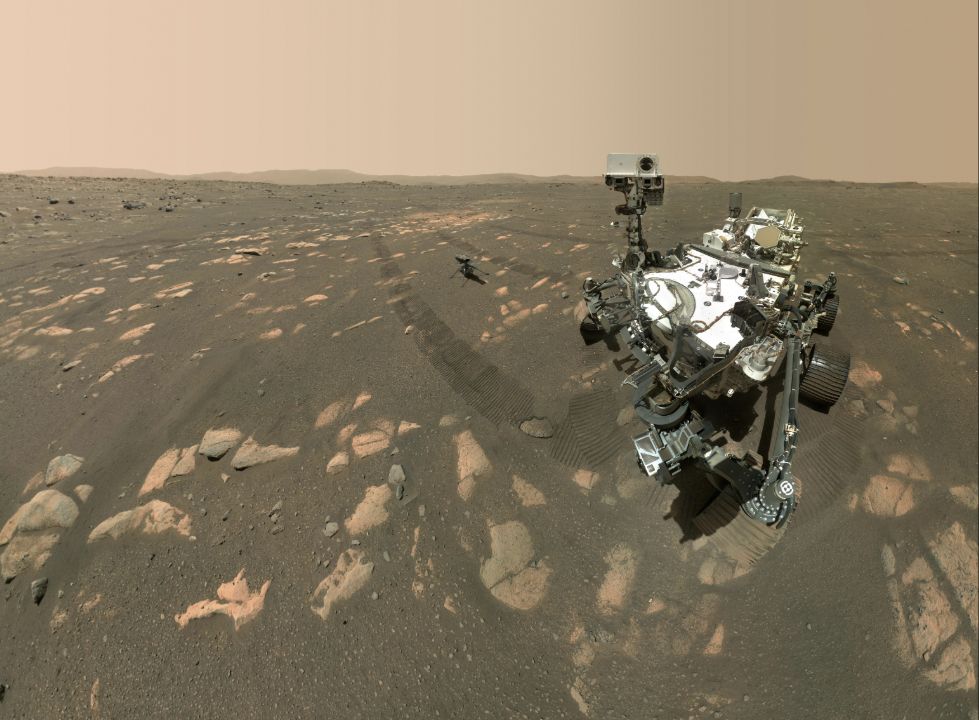
Image unavailable.
Perseverance rover and Ingenuity helicopter on the rocky surface of Mars.
What must the shell prove before entry?#
The habitat would have to hold its intended internal pressure and show that any leakage remains within the mission’s safe limits. A single pressure reading would be a starting point, not a complete leak test: pressure can change as the interior warms or cools, so operators would need to interpret a trend alongside temperature and system activity. They would also inspect seals, hatches and any reported damage from landing.
On Earth, NASA uses pressure and vacuum facilities to test spacecraft hardware and integrated systems. Those facilities demonstrate the need to qualify equipment under relevant conditions; they do not certify the fictional home. In this scenario, a doubtful result keeps the hatch closed while the crew uses its alternate shelter and investigates.
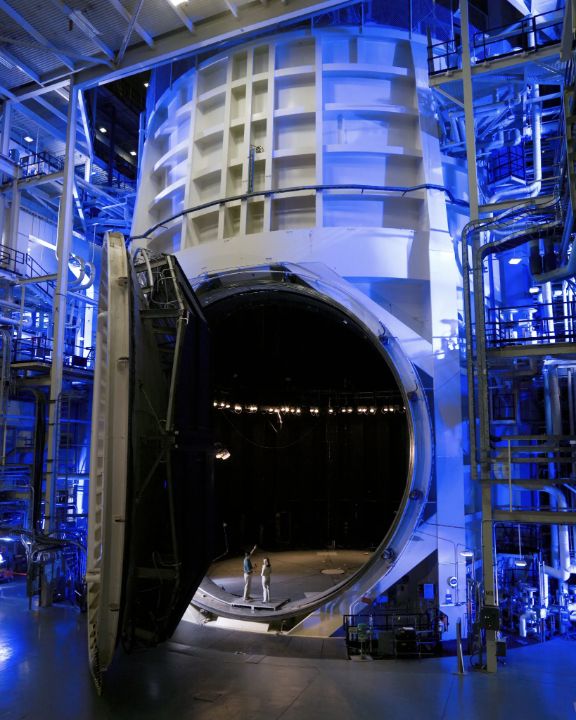
Image unavailable.
Open hatch of the large Chamber A thermal vacuum test chamber at NASA Johnson.
Sources: [3]
What keeps the air usable?#
Pressure is only one part of a livable atmosphere. People consume oxygen and exhale carbon dioxide, which must be removed before it accumulates. Fans circulate air through equipment that removes carbon dioxide and other contaminants; a supply of oxygen must also be available. A habitat would need monitoring and a way to respond if any of those functions failed.
The International Space Station offers a real example: its environmental control and life-support systems manage pressure, oxygen, ventilation, water and waste. Its air revitalization equipment removes carbon dioxide and trace contaminants, while oxygen-generation equipment splits water to produce oxygen. These are examples of functions to design for, not proof that the station’s equipment can simply be installed on Mars. The story of Apollo 13’s carbon-dioxide adapter shows why matching a filter to the system around it can matter.
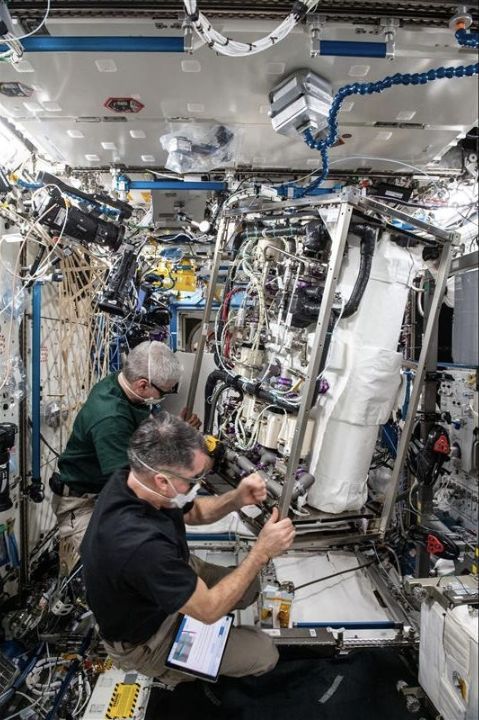
Image unavailable.
ISS astronauts working at carbon dioxide removal equipment.
Sources: [4]
Why check power and dust before opening the door?#
The crew would need confidence that power is stable enough to run monitoring, ventilation and the rest of life support, including through a failure or interruption. A reading at one moment would not establish that endurance; the fictional operators would check the available supply, loads and backup arrangements against their mission limits. The details depend on the power system selected for the imagined mission.
Mars is cold and dusty, and dust storms occur there. Dust on exposed equipment or carried into a habitat would be a practical maintenance concern, but this scenario supplies no measurement of its effects. The crew could inspect exposed components and manage dust at the entrance as part of its checkout, without assuming a particular failure. The related Sol 7 power scenario explores the wider power question.
Sources: [1]
What can an Earth habitat teach a Mars crew?#
An Earth analog can test how people live and work under selected mission-like constraints, including isolation, maintenance and limited resources. NASA’s CHAPEA program uses an isolated habitat and simulated Mars tasks to study crew health and performance. Its exercises can expose workload and operational problems before a real mission is designed.
CHAPEA is on Earth. It does not reproduce every Mars hazard, and its habitat is not evidence of a flight-qualified Mars pressure vessel. For the fictional Sol 1 crew, the useful lesson is to treat entry as an operational decision supported by measurements and rehearsed responses, rather than as a reward for arriving. If the evidence is incomplete, the safe next step in this story is to wait in the alternate shelter and find out why.
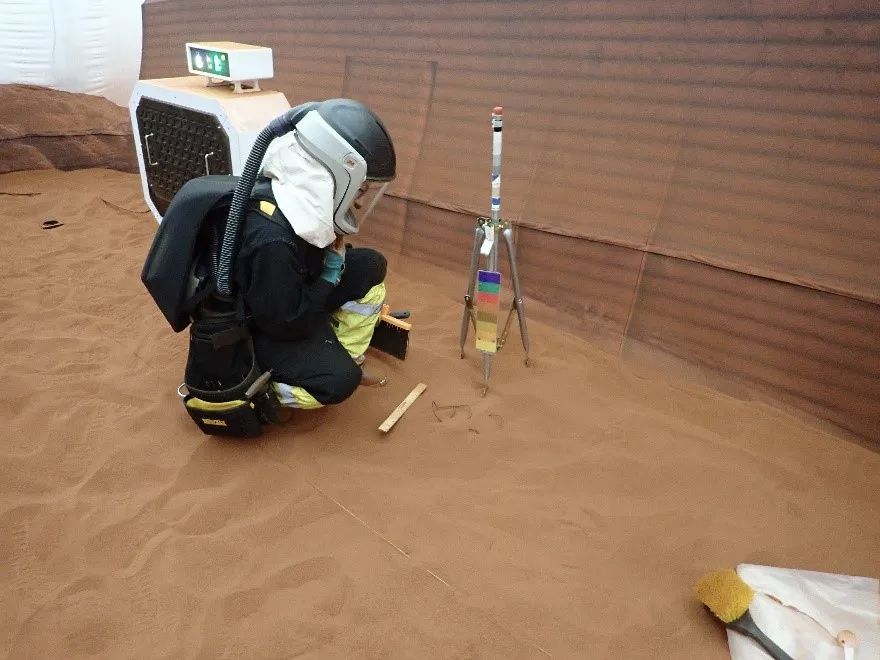
Image unavailable.
A CHAPEA crew member practices a Marswalk in an indoor red-sand test area.
Keep exploring
Sources & further reading
Follow the original research, records, and explanations behind this story.
- Mars Facts NASA
Thin atmosphere, composition and dust storms.
- About CHAPEA NASA
Earth analog constraints and crew research; also image origin.
- Spaceflight Environments & Testing: Pressure NASA
Pressure and vacuum facilities and their test roles.
- Environmental Control and Life Support Systems (ECLSS) NASA
ISS life-support functions and mechanisms.
- First NASA Mars Analog Crew Passes Mission Halfway Mark NASA
Origin of the CHAPEA Marswalk photograph.
- Perseverance’s Selfie with Ingenuity NASA
Photo identity, date and mosaic context.
Follow the thread