
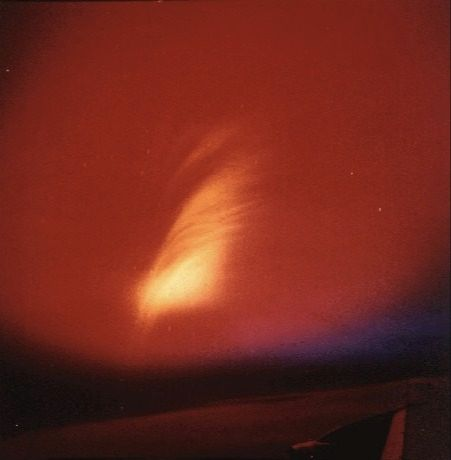

In July 1962, the United States sent a nuclear weapon high above the Pacific and detonated it in space. The flash was spectacular, but the event had two very different kinds of consequences: a brief electrical disturbance on Earth and a radiation hazard that remained in orbit.
Starfish Prime helps explain why a satellite can be affected by a nuclear test even when it was launched after the explosion. It also shows how an experiment in a seemingly remote part of space can alter an environment shared by spacecraft.
Where did the test take place?#
Starfish Prime was launched from Johnston Island, a remote Pacific outpost used for nuclear testing. A Thor rocket carried the device on a suborbital flight: it went into space without entering an orbit around Earth. The explosion occurred at roughly 400 kilometres (250 miles) altitude, according to a Smithsonian historical account.
The Department of State's published diplomatic record dates the test to July 8, 1962. That is the local Hawaiian date used here. The test's reported yield was approximately 1.4 megatons: a measure of explosive energy equivalent to about 1.4 million tons of TNT.
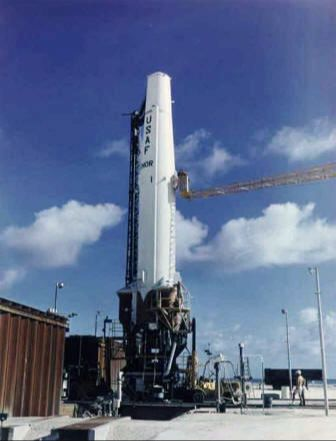
Image unavailable.
White Thor missile upright on its launch structure at Johnston Island.

What was visible from Hawaii?#
The test produced a striking glow visible from Hawaii, far from the launch site. Photographs show light above clouds and the horizon.
Hawaii also experienced electrical disruption associated with an electromagnetic pulse, or EMP, a brief electromagnetic disturbance that can induce electrical effects in equipment at a distance.
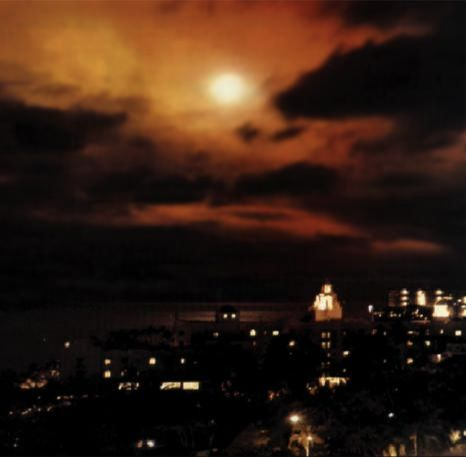
Image unavailable.
Bright orange nuclear-test glow above clouds and a city waterfront at night.

Sources: [2]
Why did radiation remain after the flash?#
Earth's magnetic field can hold energetic charged particles in regions around the planet called radiation belts. Starfish injected energetic electrons into this environment, creating an artificial contribution to the natural radiation belt. NASA researchers later modelled the Starfish electrons using measurements from several satellites; their abstract reports that the rate of decay depended on electron energy and magnetic location.
The EMP was transient. The trapped particles were a continuing exposure: NASA's account describes artificial belts from high-altitude tests persisting for weeks and, in one case, years. This range covers several tests, rather than a single lifetime for Starfish's belt. Unlike a blast wave moving through dense air, the long-lived hazard involved particles guided by Earth's magnetic field.
Did the explosion hit Telstar?#
Telstar 1 was launched on July 10, after Starfish Prime. It was therefore not in orbit when the test's initial pulse occurred. NASA's launch history records that Telstar relayed television pictures across the Atlantic soon after launch, demonstrating a new way to send live images between continents.
The later radiation environment was another matter. Smithsonian's historical account associates transistor damage on Telstar with radiation from high-altitude testing; other tests also contributed to the radiation environment during its operating life. The useful distinction is timing: damage from accumulated exposure is different from a spacecraft being struck by the original pulse.
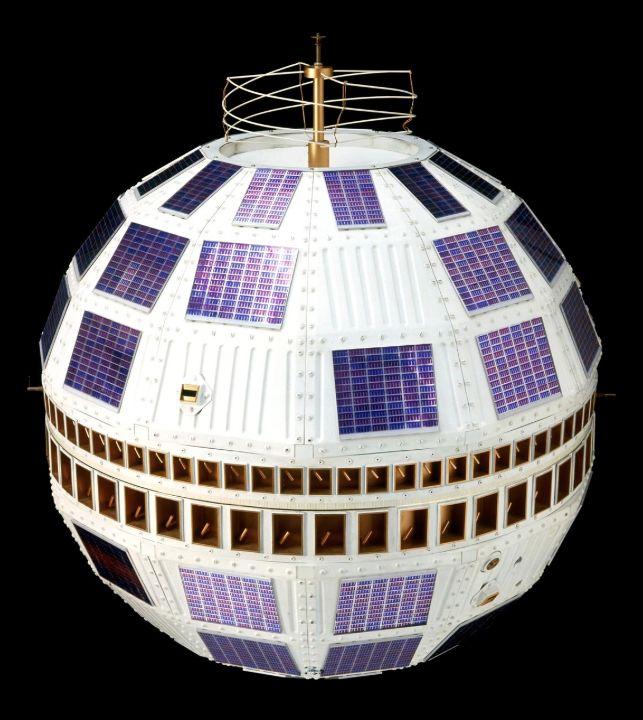
Image unavailable.
Spherical Telstar satellite replica with blue solar cells and a wire antenna.

What did the test reveal about shared space?#
A test launched from an isolated island could change conditions over a much wider region of space. NASA's account links artificial radiation belts from high-altitude tests to damage and failures in satellite electronics. The State Department's diplomatic record also notes concern about further damage to orbiting satellites when a later planned test was cancelled.
The lesson extends beyond one type of hazard: spacecraft share an environment, and activity by one nation can change the risks faced by others. A later anti-satellite missile test created a different hazard, physical debris, which required astronauts to take shelter. Radiation and debris work differently, but both can outlast the event that produced them.
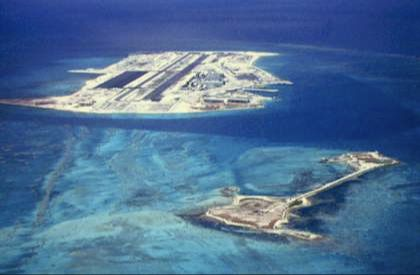
Image unavailable.
Runway and buildings on Johnston Island beside Sand Island and pale turquoise lagoon water.

Keep exploring
Sources & further reading
Follow the original research, records, and explanations behind this story.
- Foreign Relations of the United States, 1961–1963, Volume VII, Arms Control and Disarmament U.S. Department of State, Office of the Historian
Document 189 footnotes 4–5: test date and concern about satellite damage.
- Going Nuclear Over the Pacific Smithsonian Magazine
Historical account of rocket, approximate altitude and yield, Hawaii effects, and later satellite damage. Date errors in this account are not used.
- Space Weather Events Linked to Human Activity NASA
Institutional overview of artificial radiation belts and satellite effects of high-altitude tests.
- A model of the Starfish flux in the inner radiation zone NASA Technical Reports Server
1972 abstract on Starfish electrons, satellite measurements, and their decay.
- Telstar Opened Era of Global Satellite Television NASA
Telstar launch date and early television relay.
Follow the thread