
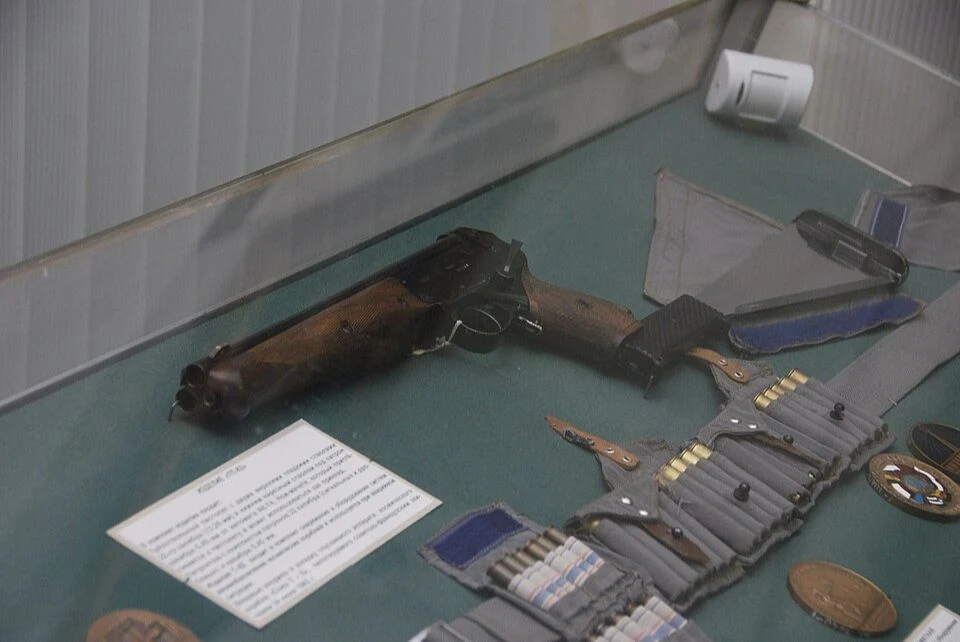

Cosmonauts carried a survival gun because returning to Earth could leave them far from help. The TP-82 combined several emergency functions in a compact object: a firearm, a means of signalling, and a stock associated with a cutting tool. Its intended setting was the wait after an unexpected landing.
Recovery involved locating a capsule, reaching the people inside it, and keeping them alive until a rescue team can take over. Equipment and training addressed different parts of that problem.
What did the Voskhod 2 landing reveal?#
A crew can survive reentry and still face a difficult journey home. In March 1965, Alexei Leonov and Pavel Belyayev returned from Voskhod 2 to an off-course landing in the Urals. Their capsule came down beyond the intended recovery area, in forest. Reaching the ground did not put them immediately beside a recovery helicopter.
ESA’s historical account describes a night in the forest before rescue. Knowing where a capsule landed and getting people safely out of that landscape are separate tasks.
Trees, snow and distance can complicate the approach to a landing site. A crew awaiting recovery needs protection from the environment and a way to remain in contact with searchers. A firearm addresses only a limited part of those needs. It cannot make an inaccessible clearing suitable for a helicopter or replace warm clothing.
The TP-82 belongs to the later history of Soyuz survival equipment. It did not rescue Leonov and Belyayev in 1965. Connecting the forest landing with the broader need for survival equipment is useful; treating the later gun as an object they used on that mission would merge different periods.
What made the TP-82 unusual?#
Its three barrels were part of a combination design. James Oberg’s 2014 reporting describes a Soyuz survival firearm with provision for shotgun ammunition, rifle ammunition and flares, together with a stock incorporating a machete. The museum photograph shows the distinctive arrangement and associated equipment. It is an artifact of a survival system rather than a complete survival system on its own.
Combining functions mattered because equipment had to travel in a crewed spacecraft. Each additional item occupied space, added mass and needed to be available after landing. A tool that combined functions could reduce the number of separate objects a crew had to carry. That is an explanation of the design’s appeal, not a measured comparison with every alternative kit.
The functions should also be kept distinct. Hunting concerns obtaining food; protection concerns a possible threat; signalling concerns making the crew’s location apparent to someone else. Describing all three as simply carrying a gun hides why a specialised combination tool might have been selected.
Why was signalling part of the problem?#
A successful rescue needs an exchange of information between the people waiting and the people searching. A visible signal can help rescuers distinguish a crew’s position from the surrounding terrain. It serves a different purpose from equipment intended to keep the crew warm or to obtain food.
NASA’s Shuttle–Mir training history describes practice for emergency Soyuz landings on both land and water. Its archive also shows David Wolf and Wendy Lawrence using flares at a simulated emergency landing site during survival training. That photograph documents the signalling exercise; it does not establish that the signal shown was fired from a TP-82.
The distinction matters when interpreting a photograph. A flare in a training picture demonstrates a rescue-signalling task. A museum display demonstrates the form of an object and the equipment arranged beside it. Neither image, by itself, tells us what every spacecraft carried on every flight.
The same principle applies to the gun’s multiple roles. A signal is useful only if it helps the wider recovery effort. The crew still depends on search planning, communication, transport and rescuers who can reach the site. The equipment connects the crew to that effort; it does not make the crew independent of it.
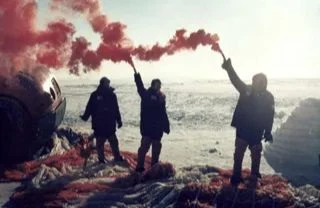
Image unavailable.
Astronauts hold smoking signal flares beside equipment in a snowy landscape.
Sources: [3]
What could a survival gun leave unsolved?#
The surrounding environment creates needs that a firearm cannot meet. Cold, wet clothing and exposure can threaten a waiting crew even when no animal is nearby. Survival equipment therefore has to be considered as a group of provisions, rather than judged by its most unusual object.
NASA’s historical description of winter training near Star City focuses on leaving a capsule and keeping warm in subfreezing conditions. Its account of water training describes changing clothing inside confined quarters, gathering survival gear and leaving the capsule in a controlled sequence. These were different exercises for different landing environments.
A portable cutting tool could contribute to camp work, while a signalling device could help attract attention. Neither provides insulation, shelter or the human coordination needed to move equipment out of a capsule. A gun’s presence should not obscure those less dramatic requirements.
The archive photograph of David Wolf in winter clothing illustrates the environmental side of the problem. It records training, not the Voskhod 2 rescue. The clothing and conditions are the relevant evidence here; the photograph is not proof of a particular weapons policy.
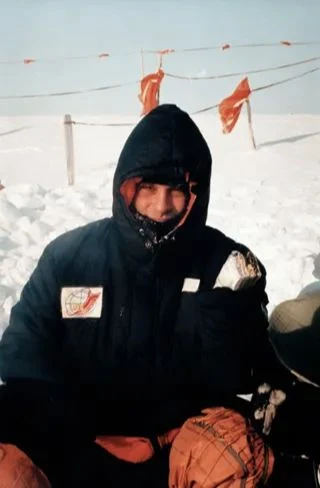
Image unavailable.
David Wolf wears insulated clothing during winter survival training.
Sources: [3]
Why did crews practise these tasks before flying?#
Packing an item and being able to use an emergency kit under mission conditions are different achievements. A crew has to know where the equipment is, how it relates to other supplies and how to work together in the space available. Rehearsal can expose difficulties that a list of kit contents leaves invisible.
NASA’s Shuttle–Mir history records extensive Soyuz systems and survival training for American astronauts preparing for Russian missions. Oberg’s reporting adds interviews with astronauts who had trained with the historical survival firearm. Those interviews establish experience with the equipment; they do not establish that a weapon was needed during an actual rescue.
A spacecraft simulator supports another part of the preparation. ESA’s photograph of the Soyuz TMA simulator at Star City shows a ground training facility used in preparation for Paolo Nespoli’s mission. It is a later Soyuz trainer, not the Voskhod 2 capsule, a flight article, or evidence that a TP-82 was stored inside that particular simulator.
The broader training story is explored in why astronauts practise survival in freezing conditions. The value of these exercises comes from matching the rehearsal to the task. A winter camp can teach a crew about working in the cold; a simulator can teach spacecraft systems. Neither reproduces every condition of an unexpected landing.
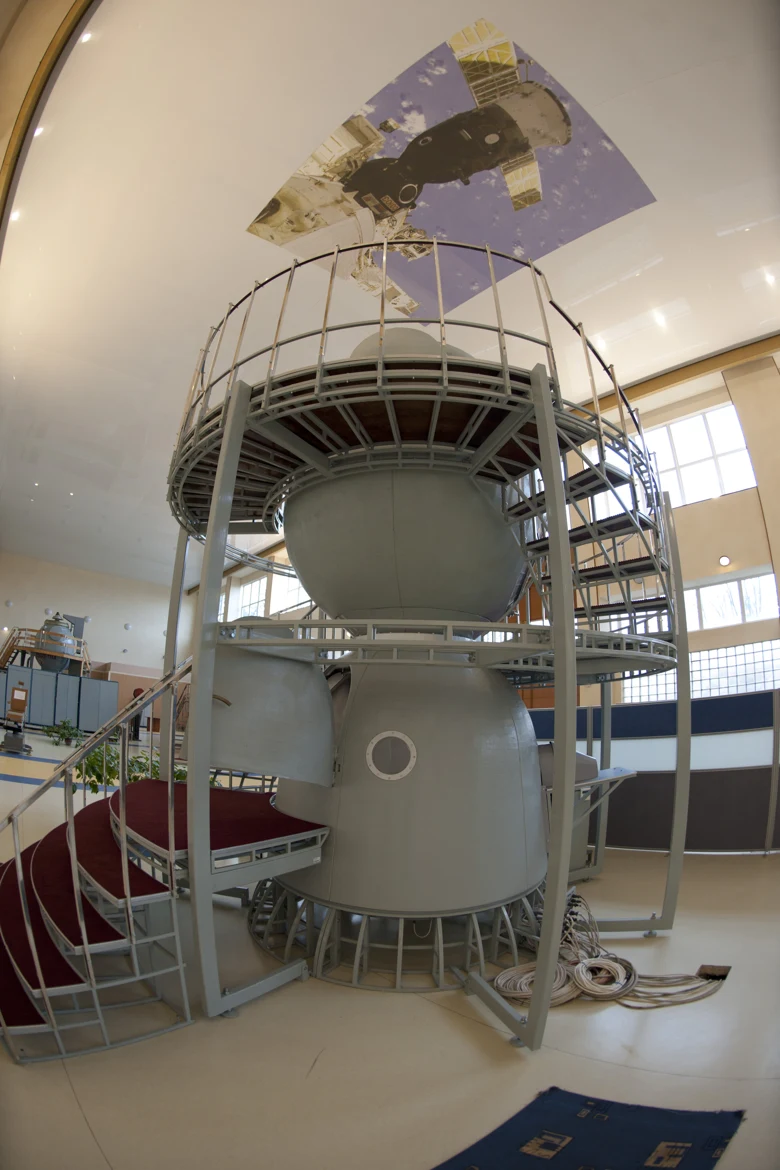
Image unavailable.
A Soyuz TMA simulator inside a ground training facility.
Does this describe what crews carry today?#
Historical evidence does not settle the contents of a present-day mission’s emergency kit. Oberg’s 2014 article reports interviews about the omission of a pistol from particular flights, alongside an astronaut’s account that it remained on an official list and was removed during reviews for specific missions. That is a dated account of a changing practice.
It should not be turned into a claim that every current crew carries a TP-82, that no firearm can ever be carried again, or that one ammunition problem explains every later decision. Establishing a current manifest would require current mission-specific evidence.
The underlying recovery problem remains a subject of training. ESA’s April 2024 account of winter survival in the Spanish Pyrenees describes preparation for remote or unexpected landings, including snow shelters, cold-related injuries and nights in freezing conditions. That was a separate course from the historical Soyuz training described above. It supplies context for the need to prepare, not confirmation of a Russian spacecraft’s equipment list.
The TP-82 is memorable because of its unusual shape. Its historical purpose becomes clearer when placed beside the rest of the recovery work: reaching people after landing, protecting them from exposure and maintaining a route to rescue. The gun was one specialised item within that larger effort.
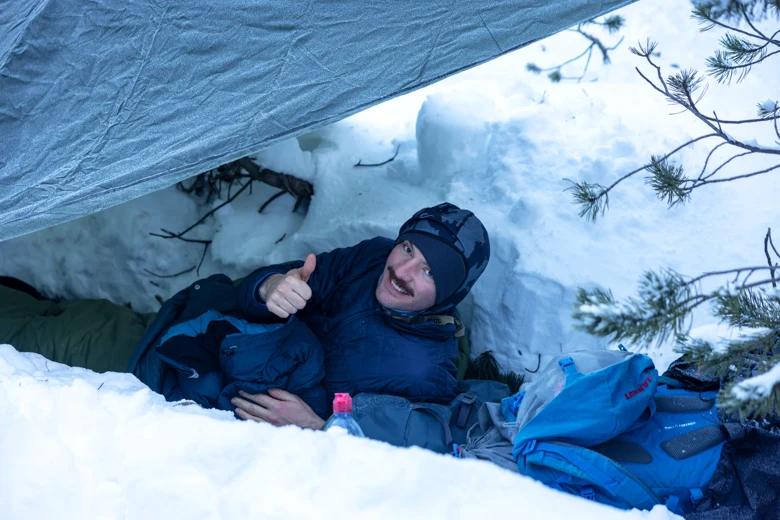
Image unavailable.
Marco Sieber sits in a snow shelter beneath a blue tarp.
Keep exploring
Sources & further reading
Follow the original research, records, and explanations behind this story.
- How I Stopped Cosmonauts From Carrying Guns IEEE Spectrum / James Oberg
2014 reporting with original astronaut interviews; historical firearm functions and dated accounts of mission-specific equipment reviews. Opinion about causes of removal is not adopted.
- Alexei Leonov: The artistic spaceman ESA
1965 flight and off-course Urals landing; no reconstruction of animal attacks or exact rescue chronology.
- Training and Operations — Shuttle–Mir NASA
Survival Training and image captions: winter and water exercises, crew coordination, and signaling.
- TP-82 in the Saint Petersburg Artillery Museum Wikimedia Commons / One half 3544
Photographer-owned museum record, physical object identity and explicit worldwide public-domain release.
- Astronaut basic training: winter survival ESA
April 2024 separate ESA course and actual winter shelter image, not a Soyuz equipment list.
- Soyuz TMA simulator ESA
2010 ground trainer identification and photograph credit; not Voskhod 2 or a flight vehicle.
Follow the thread