
A spring scale on the International Space Station would barely register an astronaut floating beside it. Earth’s pull at the station is still close to what it is at the surface. The scale reads almost zero because the astronaut and the scale are falling together. On the ground, it reads the force that keeps the astronaut from falling through it.
For experiments, “almost” matters. NASA records tiny accelerations from the station and the people aboard it. Those readings help researchers tell whether a drifting drop or a moving particle responded to the experiment itself or to a jolt in the laboratory.
What would an accelerometer read on Earth and in orbit?#
Imagine an accelerometer with a small mass on a spring. Set the instrument on a table and the case is held up by the table. The spring has to support the mass inside. The change in the spring’s length gives a reading close to one g, the familiar scale of acceleration due to gravity at Earth’s surface.
Set the same instrument falling and the case and mass follow nearly the same path. Now the spring scarcely stretches. A sensor carried along measures the push from a support or another force that the instrument feels. The falling case still accelerates toward Earth when viewed from the ground. In a short drop, the earlier and later readings would tell you when it was released and when something caught it.
How can the station keep falling without losing altitude?#
Imagine extending the station’s path in a straight line for one second from its current position. An object moving that way would leave the circular path. Gravity continually turns the station back inward, allowing it to follow the curve around Earth. The orbit has a typical speed close to 7.7 kilometers per second, so it travels a long way sideways during each second of that fall.
The cabin, a loose pencil and a floating astronaut start with nearly the same speed and direction. They also experience nearly the same gravitational acceleration. You can let go of the pencil and see it stay nearby while all three travel several kilometers over the planet.
What can upset that balance aboard the ISS?#
The station crosses extremely thin upper air. Drag acts on the outside of the spacecraft. A free object inside is shielded from that drag, so the cabin and object can drift slightly relative to each other. A rotating station, mechanical equipment and crew activity also produce small accelerations. A short vibration near a motor and a slow drift across the laboratory are different signals, even when both can disturb a measurement.
Gravity itself varies slightly across a large spacecraft. Two objects released at different heights have slightly different distances to Earth’s center. These small differences help explain why free fall is an excellent local approximation and why a laboratory still needs to monitor its surroundings.
How does NASA tell a slow drift from a jolt?#
NASA Glenn uses the Microgravity Acceleration Measurement System to monitor slow disturbances, including drag and motions of the spacecraft. The Space Acceleration Measurement System II records faster disturbances, such as vibrations and short events caused by equipment or the crew. Sensors near the work can capture vibrations that differ from what another experiment feels elsewhere on the station.
Investigators can compare the time of a change in an experiment with an acceleration record. If the change coincides with a vibration, they have a reason to examine that event before attributing it to the material they were studying. Weightlessness on the station is therefore something a laboratory measures along with its results.
Can you get the same near-zero reading on Earth?#
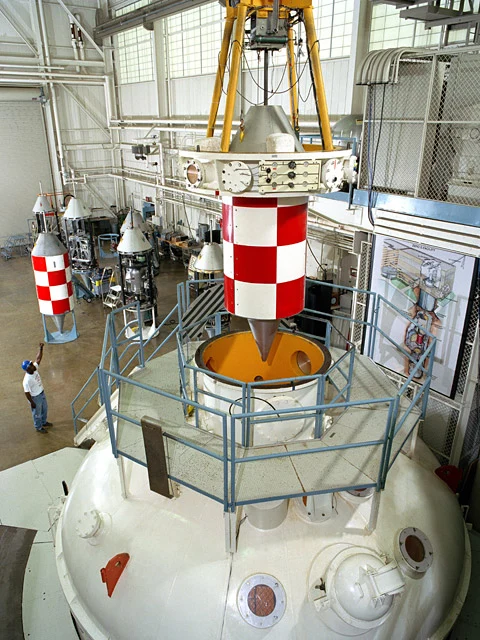
At NASA Glenn’s Zero Gravity Research Facility, experiment hardware falls about 132 meters inside an evacuated chamber. Removing most of the air brings the drag on the falling vehicle below one hundred-thousandth of a g under the facility’s stated conditions. The experiment has about 5.18 seconds of near-weightlessness before the vehicle reaches the bottom.
That is enough time to watch a liquid move or test whether hardware works in free fall. An orbit can keep a lab in that condition much longer. The drop shows how quickly the reading changes when a support is removed, even at a site that stays on the ground.
Sources: [5]
Keep exploring
Sources & further reading
Follow the original research, records, and explanations behind this story.
- What is Microgravity? NASA Glenn
Shared orbital motion, typical orbital speed and the response of a scale.
- The elevator, the rocket, and gravity: the equivalence principle Einstein Online, Max Planck Institute for Gravitational Physics
Local comparison between an elevator in free fall, the ISS and a supported observer.
- A Researcher’s Guide to the Acceleration Environment on the International Space Station NASA
Gravity gradients, drag, rotations, vibrations and interpretation of the measurements.
- Acceleration Measurements NASA Glenn Research Center ISS Payload Operations Center
MAMS and SAMS-II instrument roles and research support.
- Zero Gravity Research Facility NASA Glenn
132-meter drop, operating duration, drag specification and NASA archival photograph.
Follow the thread